ERBIL, Kurdistan Region of Iraq – Iraqi parliament speaker Haibat al-Halbousi said Saturday that using Iraqi territory to attack a neighboring country is “unacceptable,” a day after drone strikes launched from Iraq targeted an oil pipeline in Saudi Arabia.
Saudi Arabia’s foreign ministry on Saturday announced that “several drones launched from Iraq” had targeted its East-West pipeline in the Riyadh and Madina regions, expressing its “strongest condemnation” of the attacks.
"We condemn the attacks that targeted the Kingdom of Saudi Arabia,” Halbousi said in a statement, adding that “using Iraqi territory or airspace to threaten the security of the Kingdom of Saudi Arabia—or any neighboring country—is unacceptable and condemned.”
The speaker emphasized the need for “restricting arms to the state and its constitutional institutions,” under the command of Prime Minister Ali al-Zaidi, which he argued would prevent Iraq “from being dragged into regional conflicts."
He further extended support for the measures taken by the Iraqi government, “foremost among them the launch of an urgent investigation to identify the parties involved in these attacks,” and efforts to contain the situation and maintain “fraternal relations” with Riyadh.
Zaidi directed “an urgent investigation” into the attacks on Friday and ordered legal measures be taken “against anyone whose involvement is proven,” according to a statement from his spokesperson Sabah al-Numan.
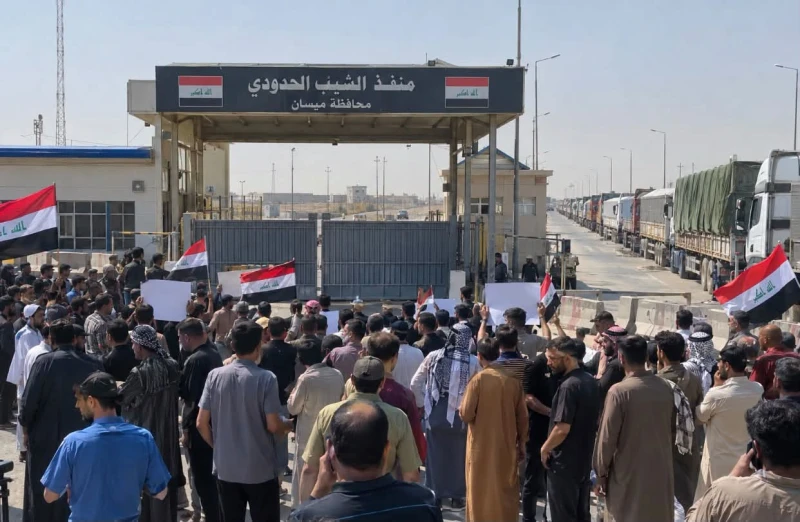
He also removed the commander of Maysan’s operations from his post following confirmation that the attacks targeting Saudi Arabia originated from the province.
In its earlier statement, Saudi’s foreign ministry asserted that Riyadh “has chosen not to respond at this stage” following a request from Zaidi to “allow” Baghdad to take necessary measures “to prevent attacks launched from Iraqi territory against the Kingdom and neighboring countries.”
Despite this, the ministry said Riyadh affirmed its “right to take all necessary measures to protect its sovereignty, security, facilities, citizens, and residents.”
The East-West pipeline currently serves as an essential energy lifeline, allowing Riyadh to export up to 7 million barrels of crude oil per day amid the maritime restrictions that Iran has put on the Strait of Hormuz.
The development comes after Saudi Arabia and the US launched coordinated attacks against several Popular Mobilization Forces (PMF) bases in Iraq in late July, killing and wounding dozens, after Saudi authorities said the country’s oil facilities had been targeted by Iran-aligned militias inside Iraq at Tehran’s behest.
 Facebook
 LinkedIn
 Telegram
 X
X