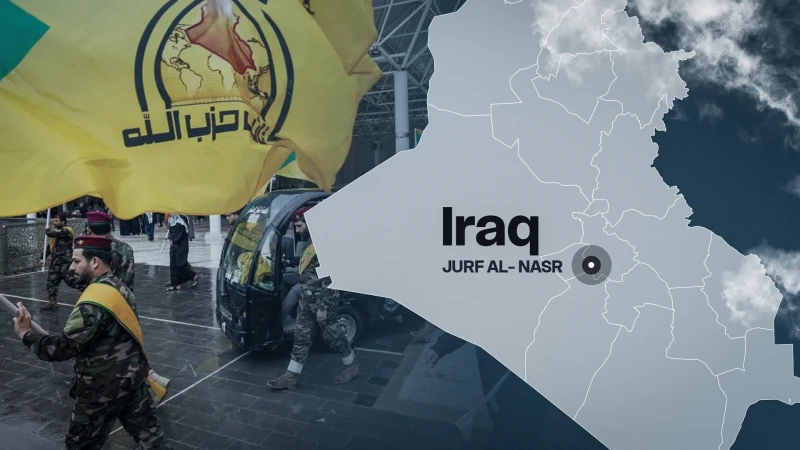
BAGHDAD, Iraq - Iraqi Prime Minister Ali al-Zaidi is holding back from completing his government and filling senior executive posts as competing demands from Washington and his powerful Shiite political backers leave him with little room to maneuver, Coordination Framework leaders told The New Region.
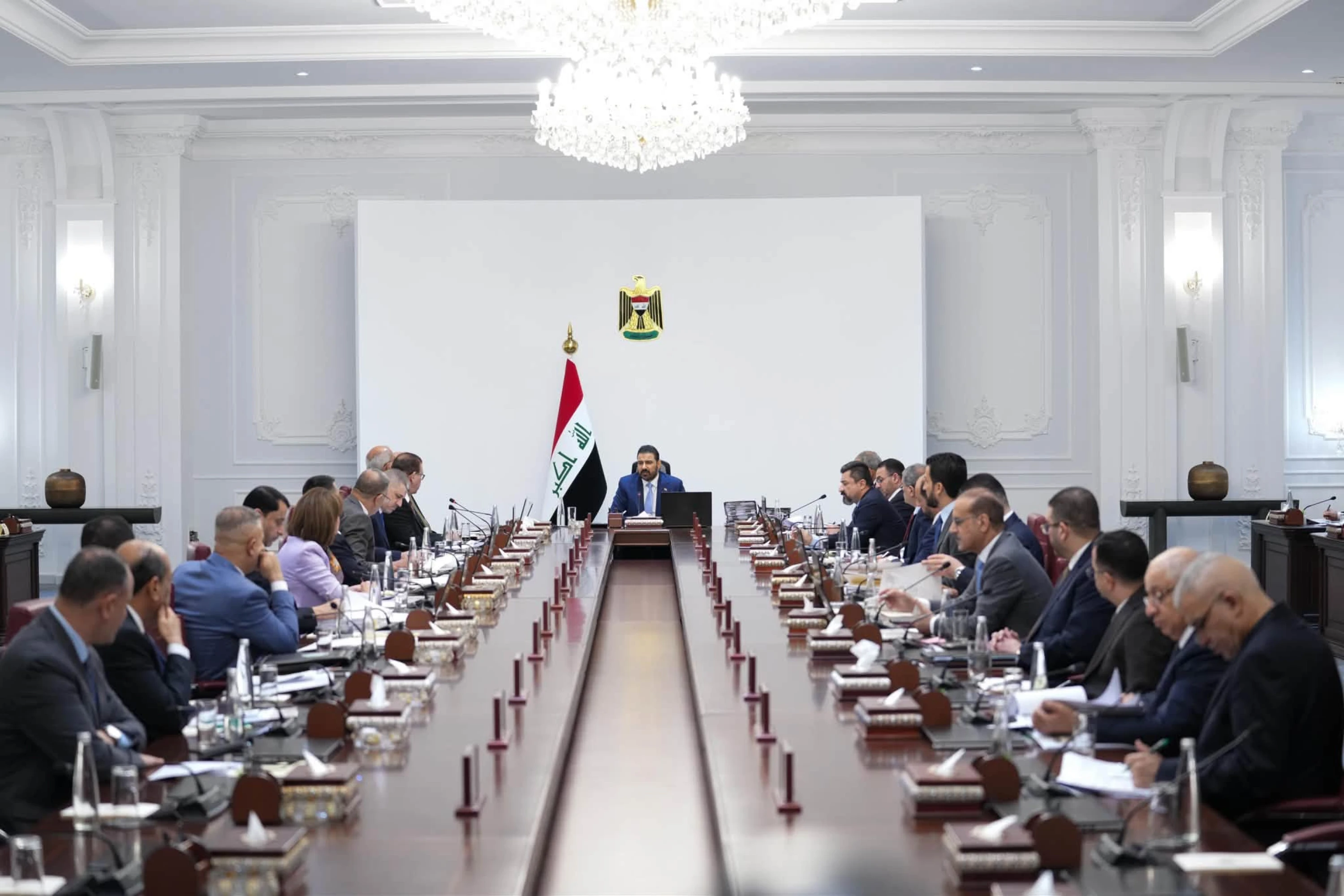
Zaidi took office in May with several key positions in his government still unsettled. Since then, nine ministries remain vacant, including the defense and interior portfolios, while talks over completing the cabinet seem to have made almost no progress.
From its first days, Zaidi’s government has faced intensifying external and domestic pressures. The US-Israeli war against Iran placed Iraq at the center of a widening regional confrontation, as Iran-backed armed factions pushed to join the fighting, increasing pressure on the government to keep the country out of the conflict.
The regional turmoil has also deepened Iraq’s financial difficulties, as the blockage of the Strait of Hormuz sharply reduced oil exports and state revenues. The government has been struggling to pay the monthly wages and benefits of more than 10 million public - sector employees, retirees and beneficiaries.
The pressure on Zaidi, however, has extended beyond the regional conflict and its financial fallout.
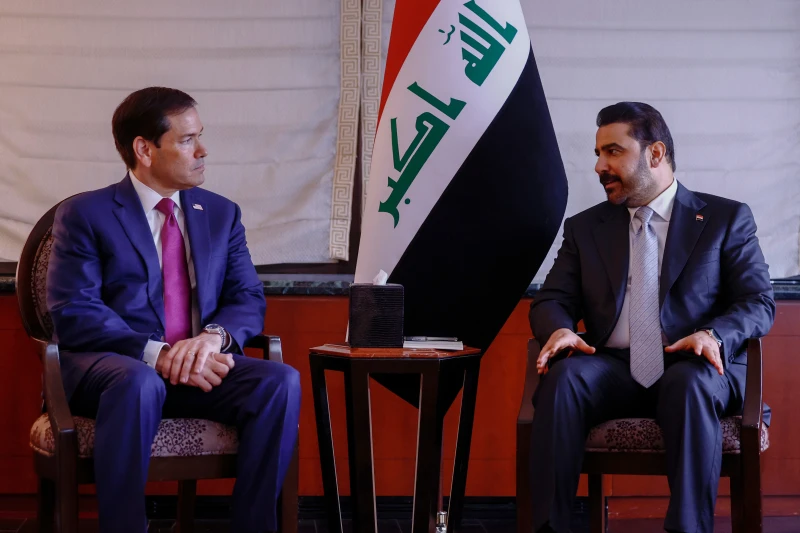
Washington has also pressed him over the composition of his government, demanding that figures belonging to or backed by Iran-aligned armed factions be excluded from top executive posts regardless of their parliamentary weight and political entitlements.
US officials have threatened to boycott Zaidi’s government and impose economic sanctions against Iraq if such appointments take place, Iraqi officials and politicians told The New Region.
Zaidi’s government emerged from an agreement within the Iran-backed Shiite Coordination Framework (CF), while his rise to the premiership was also strongly backed by influential Shiite cleric Muqtada al-Sadr. The first controls the largest bloc in parliament, while the second wields considerable influence on the streets through his millions of followers.
Zaidi has little room to maneuver. Aligning with Washington’s demands would put him at odds with powerful Coordination Framework forces demanding their agreed share of government positions, while accommodating those factions risks upsetting Sadr, CF leaders said.
“He (Zaidi) does not seem genuinely interested in completing the government. From the very beginning, he has been stalling talks to finalize the cabinet lineup,” a key CF leader said.
“He is facing real problems and is caught between two fires: the Americans and their regional allies on one side, and the Shiite factions and their allies, on the other,” the leader said. “Losing the support of either side would mean the fall of his government.”
Power-sharing arrangements break down
The ruling CF brings together Iran-backed Shiite political forces, including the political wings of armed factions, and constitutes Iraq’s largest parliamentary bloc, holding more than 180 of parliament’s 329 seats.
Under Iraq’s constitution, the largest parliamentary bloc has the right to nominate the prime minister and form the government.
Immediately after the November 2025 parliamentary elections, the US administration announced that it would not deal with any new Iraqi government that included figures affiliated with Iran-backed armed factions.
Washington demonstrated the seriousness of its position in January, when US President Donald Trump publicly rejected the nomination of former Prime Minister and State of Law Coalition leader Nouri al-Maliki for another term as premier, threatening to cut off Washington’s aid to Iraq if political forces proceeded with his nomination.
Seeking to avoid US sanctions, the CF replaced Maliki with Zaidi, who was seen at the time as a safer choice: a well-known businessman with no political history who was acceptable to domestic forces and major foreign players, including both Iran and the US.
Amid the mounting financial, security and external pressures, Iraqi political forces agreed to approve a partial cabinet, leaving ministries and other government posts where no consensus had been reached vacant.
The four deputy prime minister posts, along with the interior and defense ministries, remain key points of contention between the major political forces.
Although political forces initially agreed to appoint four deputy prime ministers as part of the power-sharing deal, the worsening financial crisis has prompted opposition to the plan within Iraq’s ruling State Administration Coalition and the CF, with some leaders arguing that the additional appointments would be difficult to justify amid growing public discontent.
Asaib Ahl al-Haq (AAH), a major faction within the CF, saw its political wing, the Sadiqoun bloc, win 28 seats in the November elections, establishing itself as the largest standalone Shiite party list in the new parliament.
Its electoral weight secured AAH a deputy speakership of parliament, a deputy prime minister post and two service ministries under the subsequent power-sharing agreement, leaders said.
Washington has since renewed its threat to boycott ministries headed by nominees affiliated with Iran-backed armed factions, complicating AAH’s efforts to secure the positions allocated to it under the political agreement.
The US has also tied the participation of Iran-backed armed factions in the government to progress on disarmament, adding another layer to negotiations already stalled over the distribution of senior posts.
The dispute has been further complicated by AAH’s insistence on nominating Laith al-Khazali, the younger brother of the group’s leader, Qais al-Khazali, for the deputy prime minister post. Laith al-Khazali is under US Treasury Department sanctions.
Khazali, who voluntarily agreed to disarm his faction and hand its weapons over to the government to pave the way for its full integration into political life, believes the move has gone unappreciated, CF leaders told The New Region.
At the same time, the deputy prime minister post allocated to AAH is at risk of being eliminated altogether, while the deputy speakership of parliament, currently held by the head of its political bureau, Adnan Faihan, is under regional and international pressure as well as domestic calls for his replacement, leaders said.
“It has turned into a matter of stubbornness rather than a lack of political consensus,” another CF leader said.
“Khazali feels he is the biggest loser in this deal and is unwilling to make any concessions or show any flexibility.”
The dispute has also spilled into negotiations over the interior ministry, allocated to Maliki’s State of Law Coalition. Khazali argues that if the four deputy prime minister posts, which were part of the original power-sharing deal, are scrapped, the entire distribution of ministries and other senior positions should be reopened.
“Khazali has a point. His bloc secured 28 seats but has so far received only one ministry and the deputy speakership of parliament in return,” a Hikma Movement leader said.
“If you take away the deputy prime minister post, you have to compensate him with another position worth the same number of points,” the source added. “He is now demanding the interior ministry to spite Maliki, but even that would not solve the problem of US rejection.”
Double-edged weapon
Zaidi’s government currently has only 14 of its 23 ministers in place, including three affiliated with or backed by Iran-aligned armed factions: the ministers of communications, transportation and water resources.
All three are already under pressure, but their presence has effectively become a double-edged weapon in the standoff.
Both Washington and the Shiite factions know that the dismissal or withdrawal of three ministers would deprive the cabinet of the quorum required to approve government decisions, effectively paralyzing Zaidi’s government and ultimately threatening its survival.
The same balance extends to parliament. Khazali maintains effective alliances with former speaker Mohammed al-Halbousi, whose Taqaddum Party and Sunni allies together control around 50 seats, and Patriotic Union of Kurdistan leader Bafel Talabani, whose party controls 17 seats.
Other influential Shiite forces could also line up with Khazali if Zaidi acted unilaterally against their consensus, including blocs led by former Prime Minister Mohammed Shia al-Sudani, Hikma leader Ammar al-Hakim and Badr Organization leader Hadi al-Amiri, while several smaller Shiite blocs would add further votes.
Together, these forces would block parliamentary votes needed to fill the remaining cabinet vacancies, leaving Zaidi caught between a government vulnerable to paralysis from within and a parliament where his opponents would prevent him from completing it.
“Khazali has become a kingmaker because of the votes he can rally for or against any measure,” a CF leader said. “Zaidi wants to complete his cabinet without provoking the Americans, but he fears Khazali.”
Beyond the battle over government posts
Publicly, Maliki has positioned himself as one of Zaidi’s strongest defenders, while Khazali has increasingly appeared as one of the main obstacles to completing his government.
But behind their competing positions, both men have an interest in ensuring that Zaidi and his government do not move beyond the influence of the political forces that brought him to power, CF leaders said.
Those concerns have deepened since late June, when Zaidi launched a series of campaigns targeting financial networks and resources linked to political parties, particularly Iran-backed Shiite forces.
The operations have since led to the detention of dozens of lawmakers, former lawmakers, senior officials and senior political figures who had long enjoyed protection from powerful political and armed factions, fueling concerns among political leaders that the crackdown could eventually reach closer to them.
For Maliki and Khazali, maintaining leverage over Zaidi therefore extends beyond the current dispute over government posts. It also provides a means of constraining a prime minister whose actions have already unsettled parts of the political establishment.
“They [he political leaders] do not feel secure because of Zaidi’s stance. Khazali provides a convenient pretext for delaying the process,” a CF leader said.
“Actually, Coordination Framework leaders are deliberately delaying the completion of the government. They want to gauge Zaidi’s true intentions,” the leader said. “If he moves against them, they will withdraw three of their ministers and bring down his government.”
Zaidi, however, is not without leverage of his own. The public backing of Sadr gives him a powerful counterweight to pressure from his political rivals, particularly Iran-backed parties and armed factions.
Although Sadr cannot provide Zaidi with parliamentary numbers, his millions of followers give the prime minister a degree of political protection that his rivals cannot easily disregard and could provide a powerful source of street support if needed.
However, that advantage also has limits for Zaidi: accommodating Khazali too much risks costing Sadr’s backing, given the longstanding rivalry between the two Shiite figures, leaders said.
“Buying time is the best option Zaidi has for now. He needs at least three months for the picture to become clearer,” the key CF leader said.
“By then, we will know the outcome of the US November election and what it means for Washington’s foreign policy, where the regional war is heading, and what becomes of the efforts to disarm Iraq’s armed factions.”
 Facebook
 LinkedIn
 Telegram
 X
X