BAGHDAD, Iraq - The United States has thrown its weight behind Iraqi Prime Minister Ali al-Zaidi’s efforts to bring Iran-backed armed factions under state control, but differences over how far the process should go and how it should be carried out are already testing the carefully negotiated roadmap he presented to US officials in New York, Iraqi officials involved in the discussions told The New Region.
Washington has pressed Zaidi since he took office in May to bring all weapons under the control of the Iraqi state and rein in Iran-backed armed factions, as their attacks against neighboring countries have become a key source of tension between Baghdad and the United States.
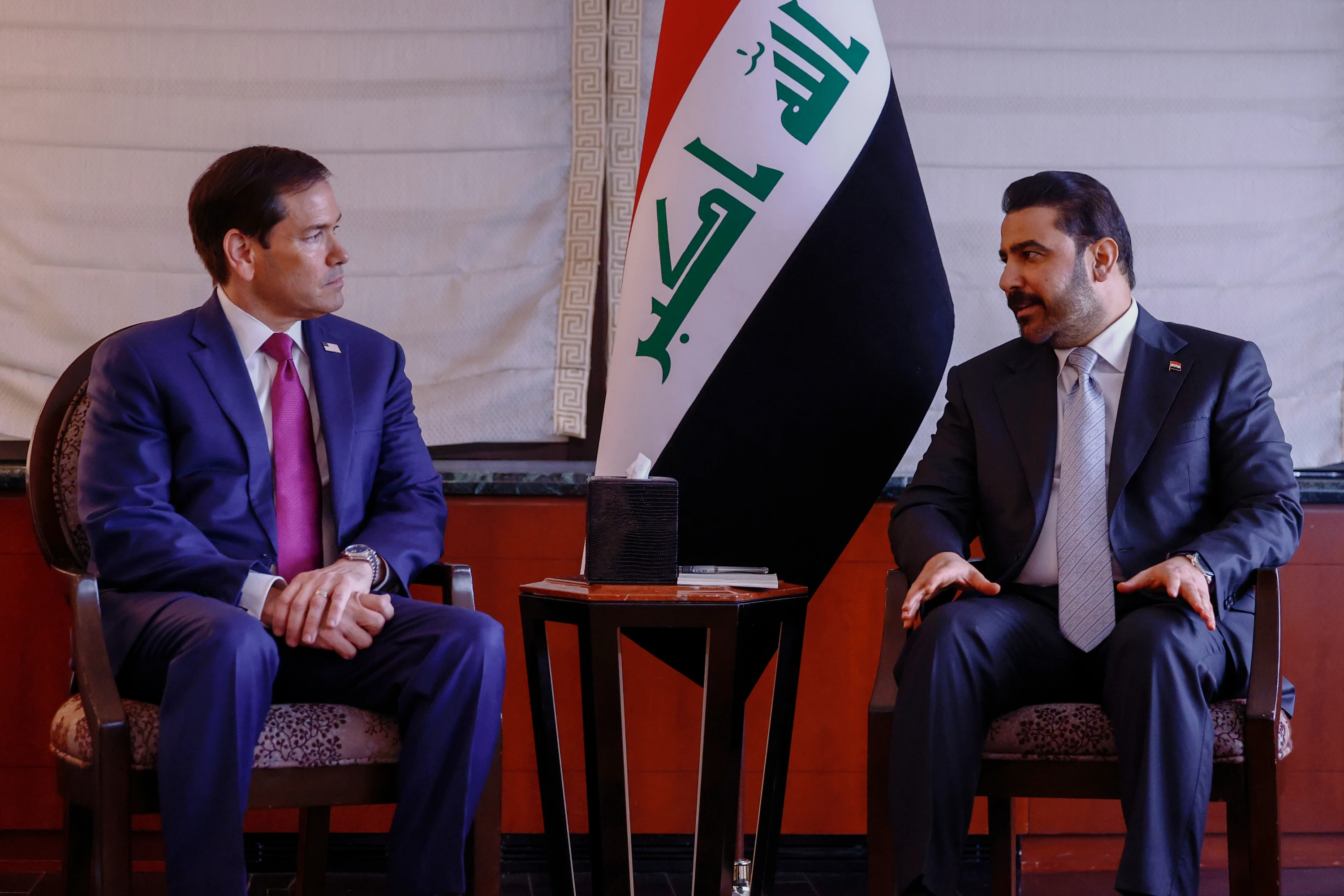
The first meeting Zaidi held in New York after arriving for the 81st session of the United Nations General Assembly was with US Secretary of State Marco Rubio on Monday. Delegations from both sides attended the talks, including US presidential envoy to Iraq and Syria Tom Barrack, Zaidi’s media office said.
Zaidi presented his government’s plan to bring weapons under state control, proposing a significantly extended timetable and a phased approach to a process he had previously pledged to complete by the end of this month, Iraqi officials involved in the talks told The New Region.
If Washington accepts Zaidi’s proposed mechanism and timetable, it would ease much of the external pressure on his government and give him greater political room and time to navigate a series of mounting domestic and economic problems. It would also signal US confidence in Zaidi’s ability to manage the armed faction problem through his own political approach, rather than pressing for a faster process that could carry significant consequences for both Baghdad and Washington.
The plan, which Zaidi outlined in an interview with The New York Times published on Monday, sets out a phased process beginning with a 90-day period during which armed factions would completely halt their military activities in return for guarantees that they would not be targeted by US forces.
After the initial 90 day period, the factions would begin gradually handing over their weapons to the state, ending their independent armed presence and integrating their fighters into the Popular Mobilization Forces (PMF) and other regular security and military formations.
Crucially, the plan pushes the deadline for bringing all weapons under state control to June 30, 2027, giving the process substantially more time than the September 30 deadline Zaidi had repeatedly vowed since taking office to meet. Any faction or armed group that refuses to comply and continues operating independently after the deadline would be treated as an outlawed group, pursued through the judiciary and considered a terrorist group.
Washington’s formal public position on the plan remained unclear, with the State Department’s readout of the meeting giving no indication of whether it had accepted or rejected Zaidi’s proposed mechanism or timetable. Barrack, however, appeared to signal US acceptance of the extended timeframe, telling Al-Monitor that there is an agreement that by the end of June, “only the state is the keeper of the military force.”
From the Iraqi side, the initial assessement of the atmosphere inside the meeting was also positive. Iraqi officials involved in the talks told The New Region that neither Rubio nor Barrack raised significant objections to Zaidi’s proposal.
“We are still assessing the Americans’ reactions, but so far Rubio and Tom [Barrack] have been very positive,” an Iraqi official involved in the Talks told The New Region.
“They clearly said they don’t have a Plan B, so they have to proceed with what Zaidi suggested. But they firmly stressed that the US would closely monitor the process.”
The Iraqi side’s initial positive assessment was followed by unexpected development later on Tuesday. Iraqi officials in Baghdad and New York had earlier told The New Region that no bilateral meeting between Zaidi and Trump was scheduled and that they did not expect the Iraqi prime minister would have an opportunity for private talks with the US president. But late that evening, Zaidi was called into a previously unscheduled meeting with Trump, Rubio, and other senior members of the adminstration. Neither Barrack nor any other member of the Iraqi delegation attended the meeting.
Zaidi’s media office confirmed the meeting, saying the two sides discussed bilateral relations, political and economic cooperation, and regional developments. However, two members of the Iraqi delegation told The New Region that they had not been informed in advance that the meeting would take place, with one saying it was arranged late at night.
A day later, Rubio offered a much clearer indication of Washington’s position, expressing strong confidence in Zaidi and acknowledging the scale and difficulty of the task ahead.
“We have zero doubt of his [Zaidi’s] commitment to doing this,” Rubio said in a press conference on Wednesday. “We understand it’s a massive challenge and a difficult challenge.”
“We want him to succeed… We’re going to do everything we can to help him achieve results,” he added.
The bargain behind the plan
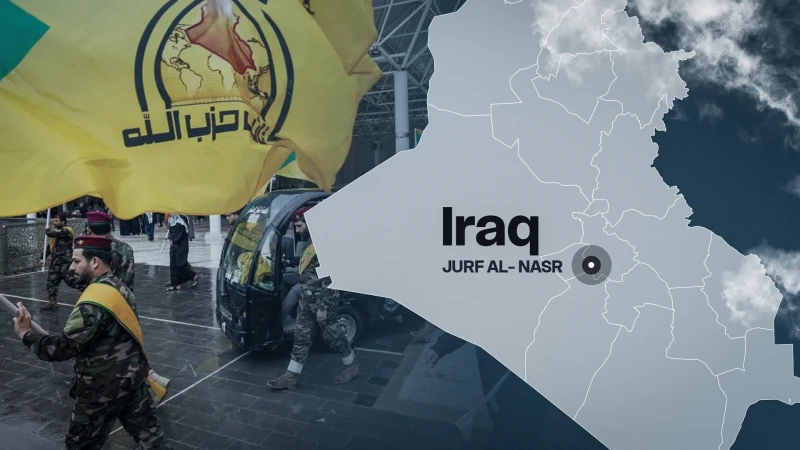
The proposal Zaidi took to New York was the product of weeks of difficult negotiations at home, triggered by the rejection of his earlier disarmament push by three Iran-backed armed factions: Kataib Hezbollah, Harakat Hezbollah al-Nujaba, and Kataib Sayyid al-Shuhada, which operate under the banner of the Islamic Resistance in Iraq.
Their opposition, which came close to triggering a military confrontation with the government last month, prompted nearly 40 days of negotiations between faction commanders and a committee led by the Coordination Framework, Iraq’s ruling Shiite political coalition, aimed at finding a formula that would bring their weapons under state control and place decisions over war and military action exclusively in the hands of the Iraqi state.
A copy of the agreement obtained by The New Region showed that the negotiations resulted in a 12-point deal agreed by the government, the armed factions, and the Coordination Framework, which brokered the talks and acted as guarantor of the agreement.
The deal, set to go into effect on September 30, places decisions over war and peace exclusively in the hands of Iraq’s constitutional authorities and requires the factions to bring their weapons and military activities within the legal framework of the state and under the authority of the Popular Mobilization Commission (PMC).
The agreement requires the Iraqi government to end the presence of the US-led coalition in Iraq, end the Turkish military presence at the Zilkan base near Bashiqa, remove Kurdistan Workers’ Party (PKK) fighters and armed Iranian opposition groups from Iraqi territory, including the Kurdistan Region, submit amendments to the existing PMF law to parliament, and acquire air-defense systems to strengthen protection of Iraqi airspace. It also requires US forces to complete their withdrawal from Iraq and the US side to refrain from strikes on Iraqi territory, while the parliament is tasked with passing the amended PMF law.
The agreement also stipulates that the government, the Coordination Framework, and the armed factions issue a joint statement on October 1 publicly committing the three sides to the roadmap set out in the deal.
“By the end of September, the factions will be told: you won. You forced US forces to withdraw and achieved your mission, thank you,” a senior PMF official involved in the negotiations told The New Region.
“This is your victory and you have every right to claim it. Now you have to lay down your weapons and turn to civilian activities.”
Baghdad has already begun moving on several of its commitments under the agreement with the US forces withdrawal, due to be completed by September 30, the most advanced. Iraqi security officials told The New Region that most of the troops have already left and that Baghdad does not expect any extension beyond the agreed-upon deadline.
Progress has also been made with Turkey. Following talks in New York on Wednesday, Zaidi and Turkish President Recep Tayyip Erdogan announced that Turkish forces would gradually hand over the Bashiqa-Zilkan camp to the Iraqi federal government under an agreed mechanism and timetable.
Iraqi authorities are also developing a plan with Turkey to dismantle the PKK’s armed presence in the country, while a separate plan is being prepared to disarm Iranian opposition groups and move them away from areas along the Iraq-Iran border, Iraqi officials told The New Region.
“The government is absolutely serious about ending the presence of all the foriegn armed groups on Iraqi territories, so there will be no excuse for any local or regional party to attack us,” an Iraqi senior security official told The New region.
One Goal, different paths
The armed factions, for their part, have committed to a phased truce, suspending military activities until September 30 in the first stage and extending the halt until December 1 in a second phase, faction commanders told The New Region.
Despite Washington's heavy backing for Zaidi efforts, a significant gap remains between Baghdad and Washington over what the process would actually entail.
The roadmap agreed in Baghdad is aimed at ending the factions’ independent military role and bringing their weapons and fighters under state authority without requiring their immediate dissolution as organizations, Iraqi officials told The New Region.
Under the Iraqi plan, the factions would end their independent military activities and transfer their weapons to their existing brigades within the PMF, while their fighters would gradually be absorbed into the PMF and other state security institutions, officials said.
The approach was designed to give the factions a role in deciding how that transition takes place. It treats them as partners in the process, recognizing their role in the fight against ISIS while preserving a place for them within Iraq’s political and security system, and gives them a say in what happens to their weapons and fighters and what role they could play afterward.
What Washington has outlined appears different. The State Department statement issued after Rubio’s meeting with Zaidi on Tuesday suggested that the two had “agreed on the importance of Iraq dismantling terrorist militias,” describing the factions in markedly different terms from those used in the Baghdad roadmap.
Rubio, who also serves as US national security advisor and oversees the file on Iraq’s armed factions, has reinforced that message. In several media interviews over the past few days, he has repeatedly emphasized what Washington expects from Zaidi on the issue, consistently framing the goal as dismantling the factions rather than simply disarming them.
Describing the factions as “terrorist militias” to be dismantled puts them outside the negotiated transition envisioned in Baghdad, leaving little room for them to negotiate the fate of their organizations, fighters and weapons, or secure the time and guarantees built into the roadmap.
The extent of that gap is also evident in the timetable. Zaidi’s plan gives the factions until the end of June 2027 to move through the gradual process agreed in Baghdad, but it remains unclear whether Washington has accepted that timeframe. Rubio said in one of his media interviews that no timetable had been discussed, an account also confirmed to The New Region by Iraqi officials involved in the New York meetings.
Those differences have begun testing the Baghdad agreement before Zaidi has even returned home. Some factions commanders have directed their frustration primarily at Zaidi, questioning whether he agreed to additional terms in New York that were not part of the deal negotiated at home and have not been disclosed.
The three factions no longer appear to hold a unified position on moving forward with the agreement. Kataib Sayyid al-Shuhada has committed itself to the deal reached with the government and the Coordination Framework and intends to monitor Baghdad’s implementation of its commitments before proceeding with the gradual integration of its fighters and military capabilities into state security formations, one of its commanders told The New Region.
By contrast, Harakat Hezbollah al-Nujaba and Kataib Hezbollah have taken a harder position, with their suspicions reinforced by Zaidi’s previously unscheduled meeting with Trump.
A senior Harakat Hezbollah al-Nujaba commander told The New Region that his group doubts US forces would fully withdraw from Iraq by September 30 and is not concerned with any understandings the government may have reached in New York.
“Whatever the government agreed on in New York is their own business. We have nothing to do with it,” the commander said.
“Kataib Hezbollah shares our position, but Kataib Sayyid al-Shuhada has taken a different approach.”
 Facebook
 LinkedIn
 Telegram
 X
X