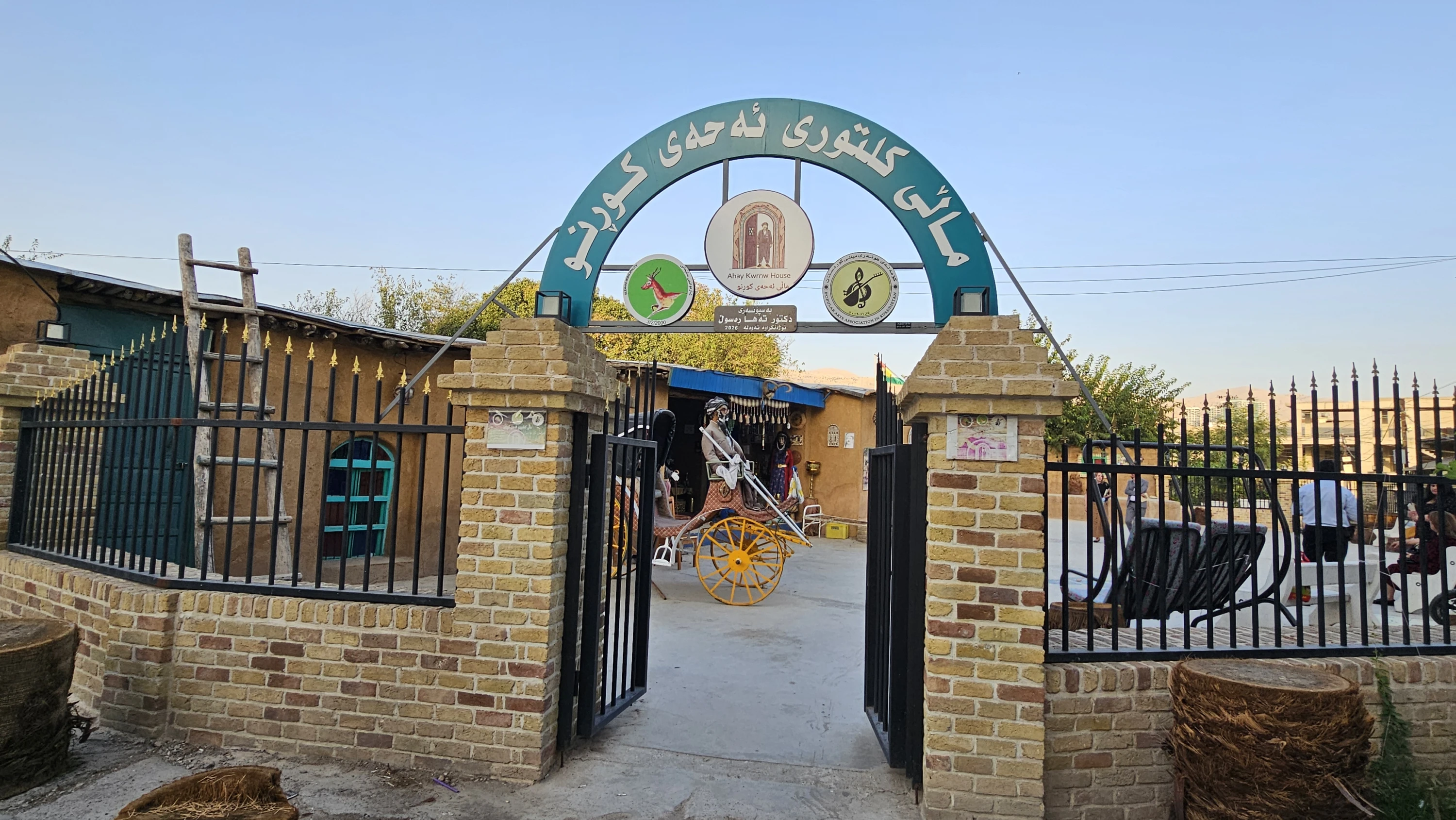
SULAIMANI, Kurdistan Region of Iraq – When Nishtiman Kaka Rash left her native Sulaimani for Nuremberg, Germany, she took with her the vivid memories of the narrow, historic alleyways where she grew up.
Years later, when she finally returned to Shekhan – one of the city’s oldest quarters – she did not find a forgotten ruin. Instead, she stood under the open sky in the courtyard of a lovingly restored stone home, delivering her poems to a crowd yearning to hear poetry.
For Nishtiman, the reading was far more than an artistic homecoming. It was an emotional reunion with a city undergoing rapid, unforgiving transformation.
Where Nishtiman stood reciting verses, merchants from the adjacent bazaar had until recently dumped their daily garbage. Today, that once-neglected ruin has become the Ahay Kurnu Cultural House, a living sanctuary for poets, musicians, historians, and ordinary residents determined to rescue Sulaimani’s cultural soul from the bulldozer.
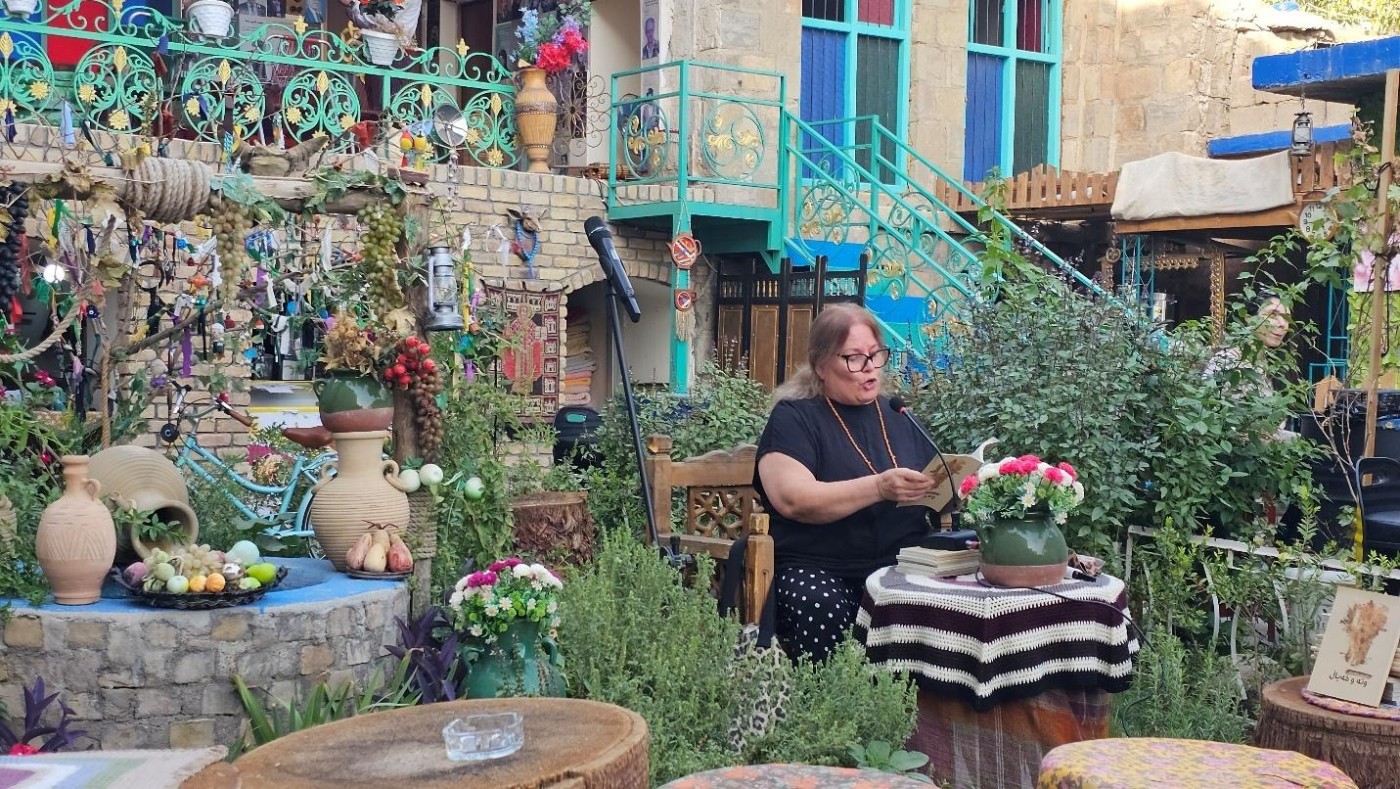
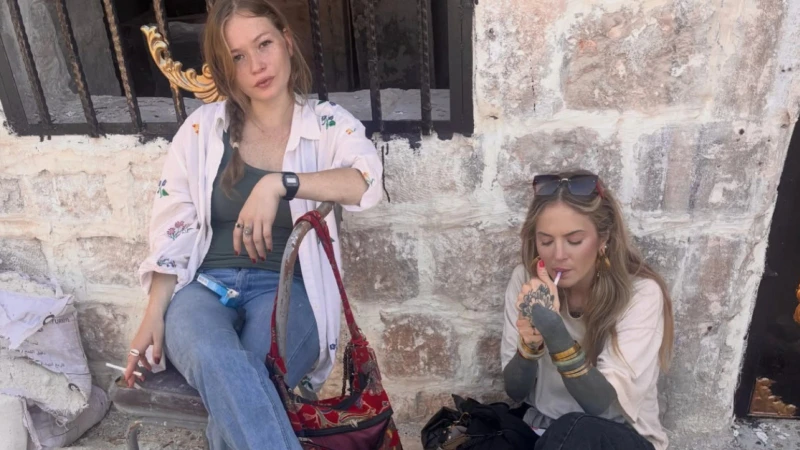
Nishtiman Kaka Rash¸ an exiled Kurdish poet, recites her poems at Ahay Kurnu Cultural House. Photo: Dana Taib Menmy / The New Region
A house for the common person
The transformation of Ahay Kurnu began as a grassroots rescue mission rather than a state initiative.
“Ahay Kurnu Cultural House was just some ruined houses that became a place of rubbish for shopkeepers of the local bazaar,” said Jazay Saz, director of the cultural house.
Seeking a permanent home for their activities, the Popular Arts Association in Sulaimani petitioned municipal authorities for permission to renovate the site. Renovation was eventually made possible through funding provided by Taha Rasul, a prominent Kurdish intellectual figure. Yet as construction began, neighborhood residents intervened with a distinct vision of their own.
“While rehabilitating, people of Sulaimani asked that the houses be used as the living place of several famous families of Sulaimani and should be kept as a living memory of the city,” Saz explained. “Hence, we took on the duty of turning the house into a heritage house that now embraces both the office of our music association as well as a house for intellectuals, poets, writers, and all people.”
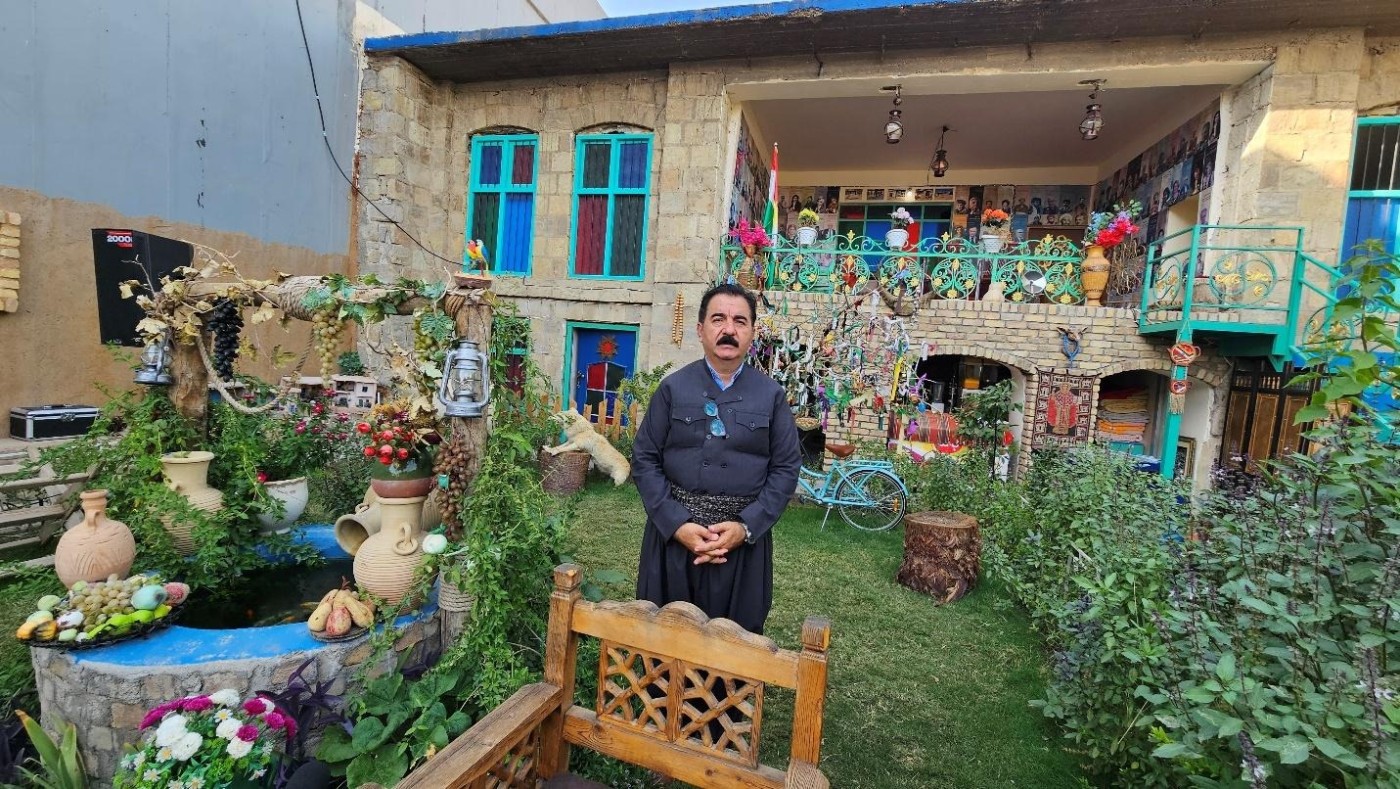
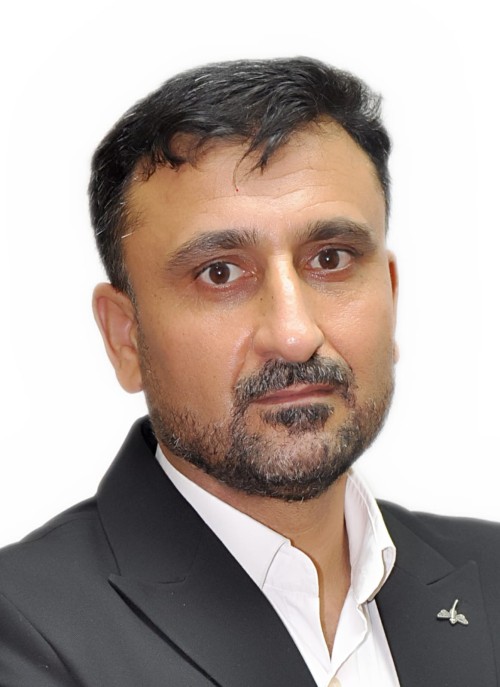
Jazay Saz, Director of Ahay Kurnu Cultural House. Photo: Dana Taib Menmy / The New Region
The decision to name the center after Ahay Kurnu reflected that populist spirit. Kurnu was neither a famous politician nor a wealthy benefactor; he was a poor, beloved local character celebrated for his quick wit, tales, and the grape juice he sold from a street cart. By naming the courtyard after him, the community sent a clear message: Sulaimani’s heritage belonged to its ordinary citizens.
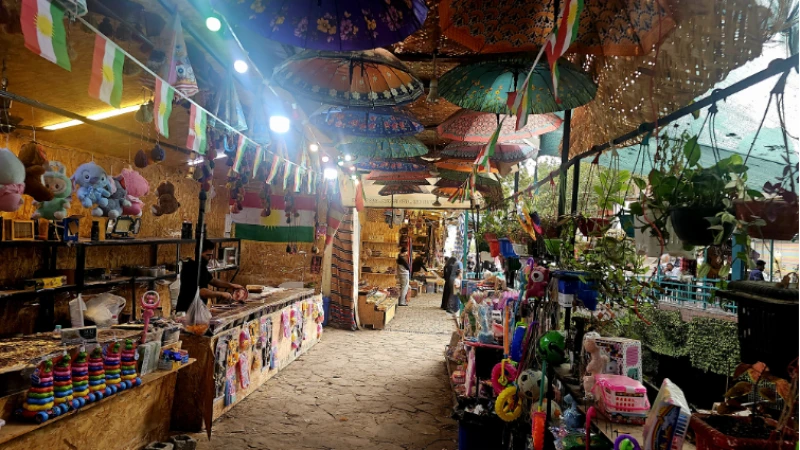
Since opening its doors, the house has drawn visitors from across the Kurdistan Region, central and southern Iraq, and the European diaspora – at times welcoming nearly a hundred guests in a single hour. Inside, traditional music sessions echo off stone walls lined with donated antiques and family heirlooms.
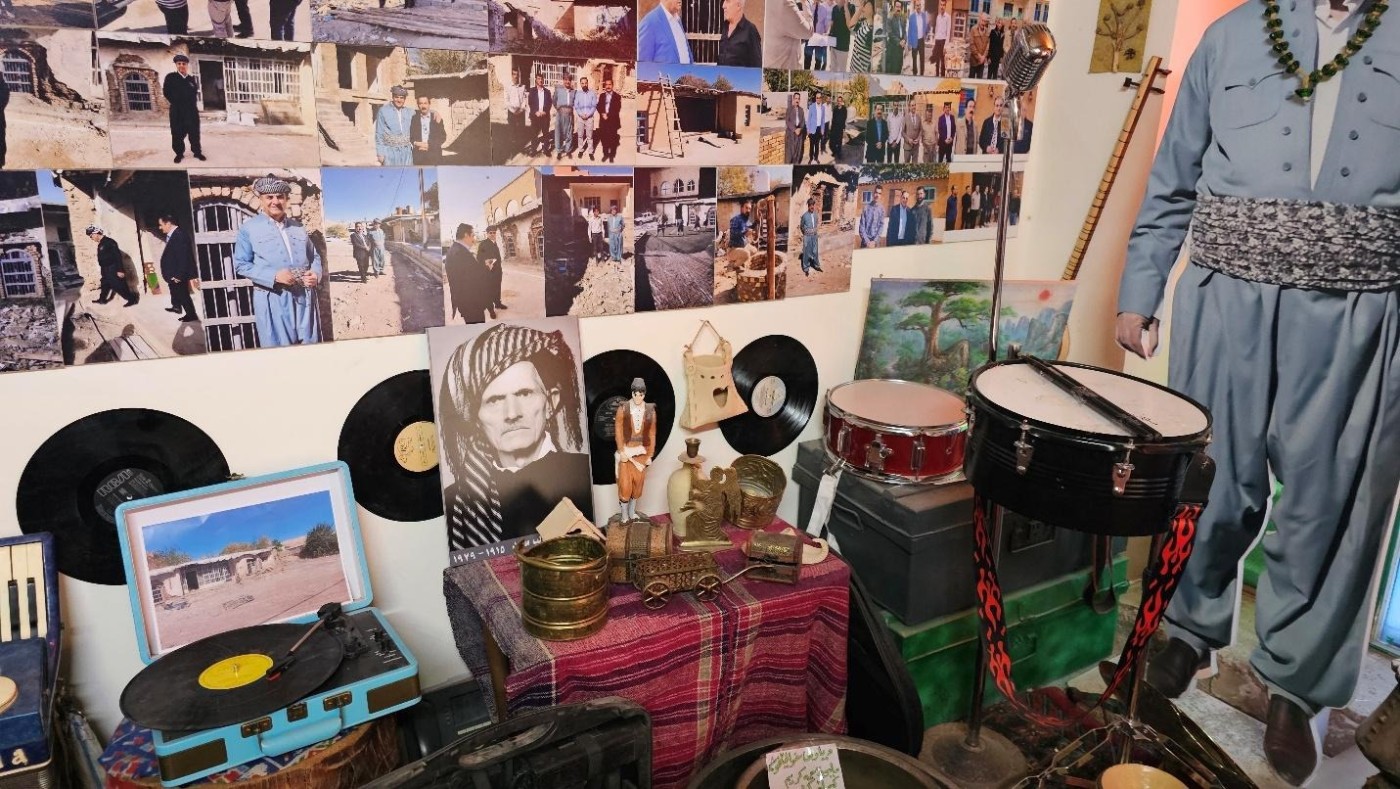
Donated antiques and family inheritances displayed at Ahay Kurnu Cultural House. Photo: Dana Taib Menmy / The New Region
Preservation without a safety net
Yet despite its popularity, Ahay Kurnu operates on the edge of survival.
“Although we offer continuous cultural activities to the people of Sulaimani, no governmental bodies have assisted us,” Jaza said.
Instead of receiving public subsidies, the association pays annual rent to the municipality alongside standard electricity and water bills. Roofs require urgent repairs before winter rains set in, and the center’s resident musicians perform without government stipends.
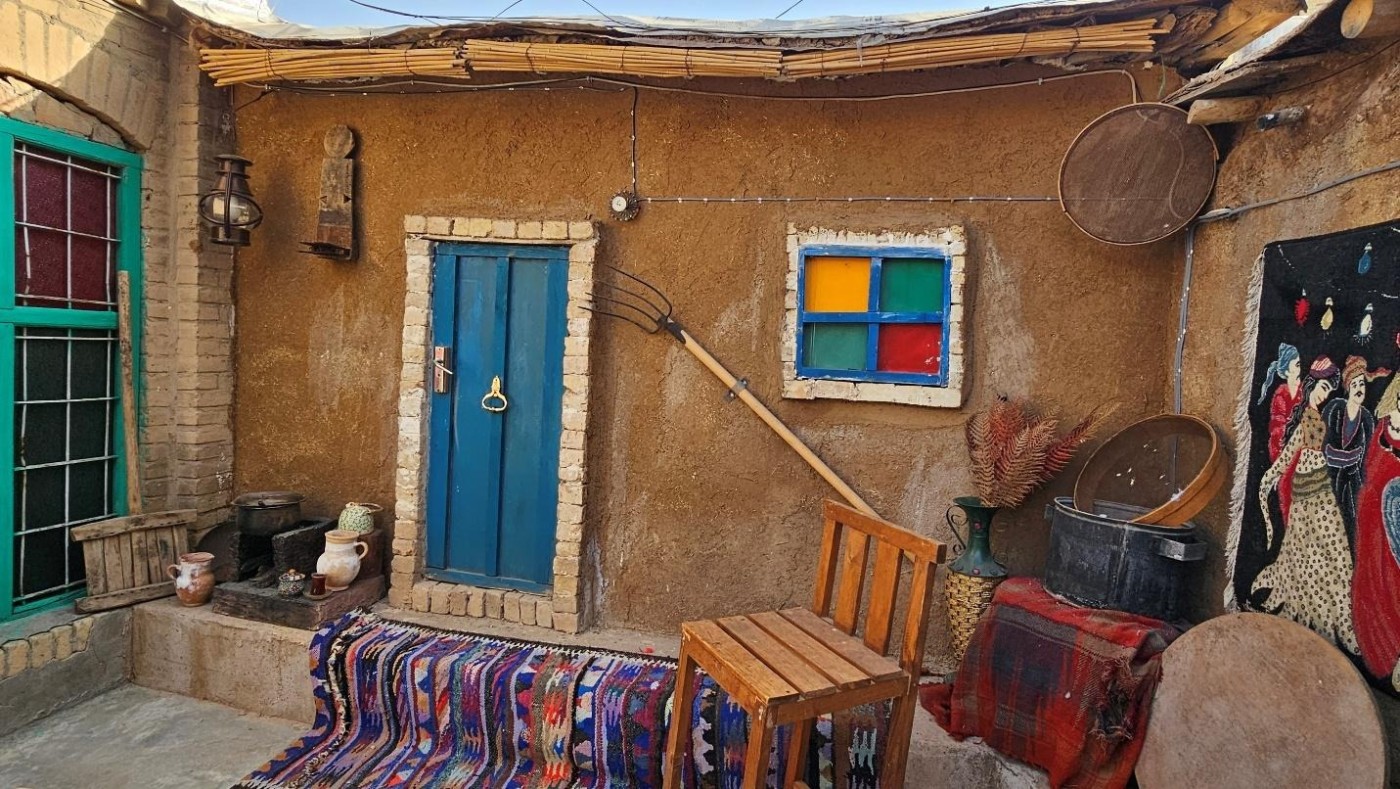
Jaza criticized official indifference toward heritage conservation, saying that in other parts of the world, historic buildings receive state protection and utility subsidies.
He recalled how Hero Ibrahim Ahmed, Iraq’s former first lady, once urged the Kurdistan Regional Government (KRG) to buy up historic properties to prevent them from being demolished for parking lots or commercial centers. The original dream had been to salvage an entire historical district, he noted, but dozens of century-old homes collapsed because of heavy rains before action was taken.
Listening to the echoes of Goran Street
A short distance away on Goran Street, the same tug-of-war between preservation and modernization plays out at the Sofi Karim Saraj Heritage House.
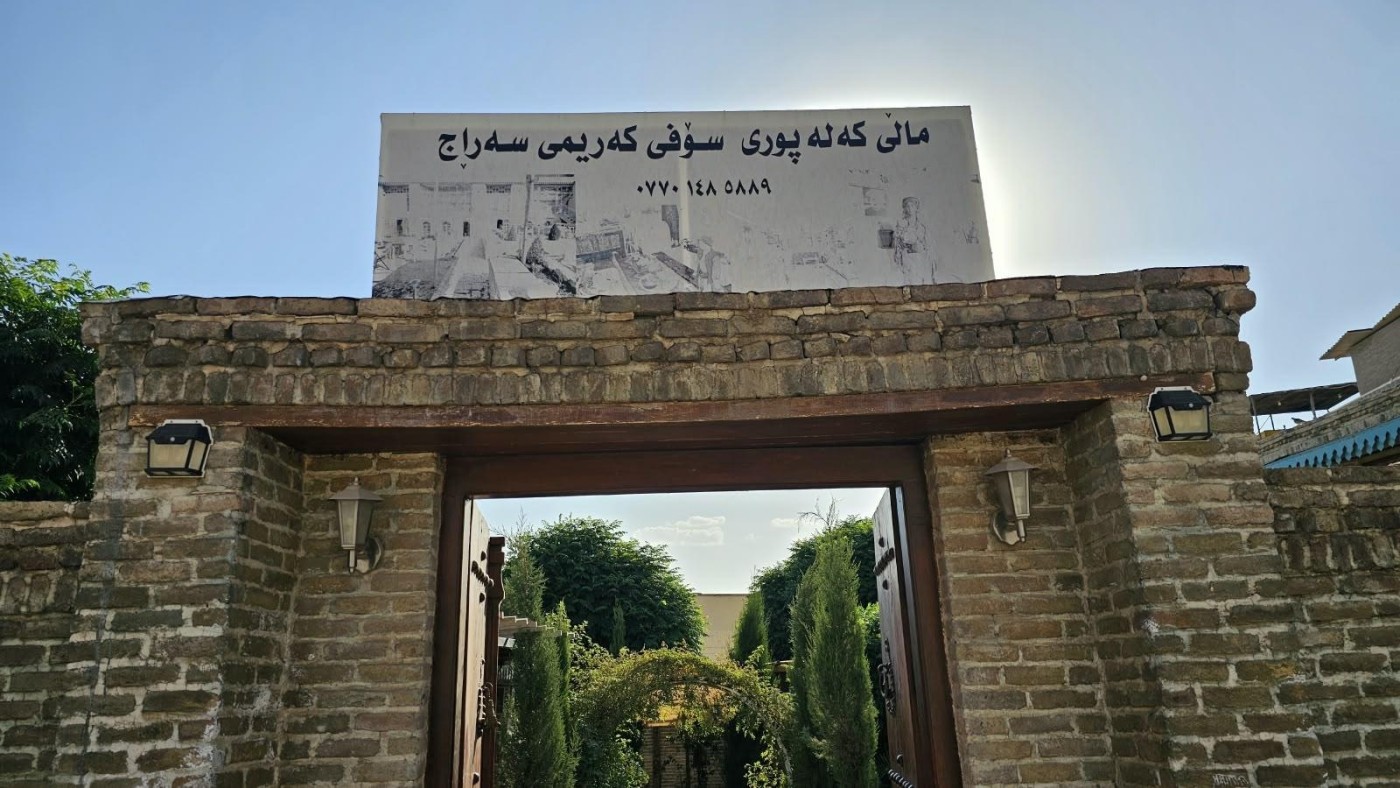
Sofi Karim Saraj Heritage House. Photo: Dana Taib Menmy / The New Region
Built in 1897, the restored complex now functions as a museum and folklore center. Inside, traditional Kurdish clothing, historic craft tools, and black-and-white portraits of Sulaimani’s prominent cultural figures line the corridors. In the courtyard, a sculpture of legendary Kurdish singer Hassan Zirak stands as a tribute to the city's artistic legacy.
Outside the gates, daily life carries on. Zirak’s music drifts from a neighboring teahouse, where local men gather to play nard (backgammon) over small glasses of strong black tea.
Akram Othman, director of culture and heritage at Sofi Karim House, said the structure was restored by the Directorate of Heritage and Antiques and passed to them to run it as a heritage house because they had an extensive collection of artifacts.
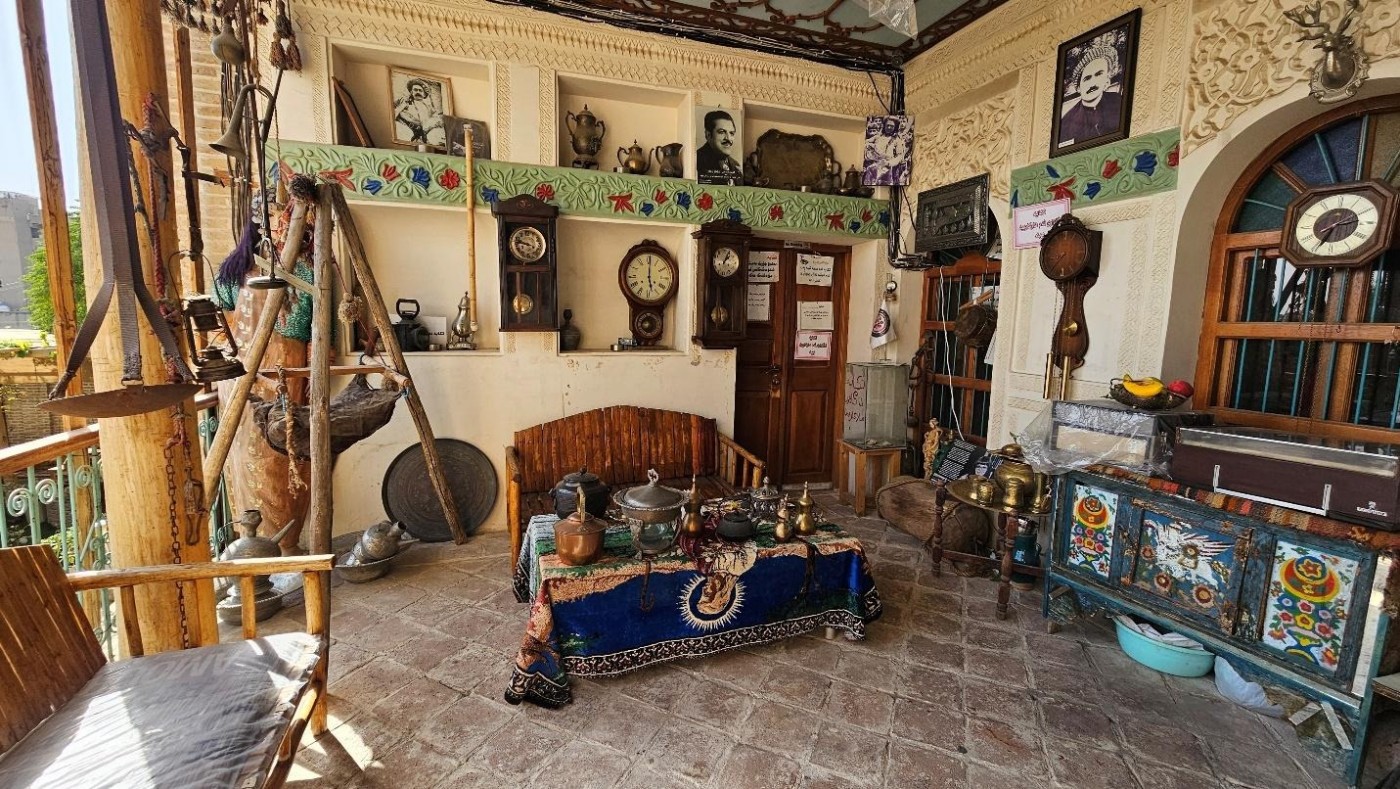
Heritage and Antiques displayed at Sofi Karim Heritage House. Photo: Dana Taib Menmy / The New Region
“Heritage houses play a key role in preserving the heritage and culture of the Kurdistan Region,” Othman said.
However, he warned that without urgent efforts, Kurdish heritage faces permanent loss. Rapid urban expansion continues to swallow up historic properties, while independent voices advocating for folklore preservation are routinely sidelined by urban planners.
Promises in stone
For their part, municipal officials insist that heritage preservation remains on the public agenda. Muhsin Adib, Director-General of the General Directorate of Culture and Arts in Sulaimani and a municipal council member, views historic homes as vital civic assets.
“First, preserving the names of the prominent figures from Sulaimani through rehabilitating their houses – you make them immortal,” Adib said. “The second perspective is that the cultural or heritage houses serve to preserve the civilization and heritage, and heritage architecture of Sulaimani and the Kurdistan region.”
Adib said his office has collaborated with the antiquities directorate on plans to designate specific quarters as historic zones while converting old properties into municipal cultural offices. A budget of two billion Iraqi dinars (over $1.5 million) has been earmarked to buy back and restore historic homes, though the funds have yet to be disbursed.
To date, about five cultural houses have been renovated across Sulaimani under official heritage guidelines designed to maintain their structural integrity.
For the artists and volunteers maintaining these spaces, survival remains a day-to-day struggle. Yet the human impact of their work is undeniable.
As evening settled over Shekhan on the night of Nishtiman’s performance, she stood before her audience in the courtyard of Ahay Kurnu and read her final lines. Surrounded by stone walls that had once sheltered trash, the space felt alive with conversation, music, and shared history.
Outside, concrete high-rises continue to reshape Sulaimani’s skyline, long celebrated as the cultural capital of the Kurdistan Region. Wars, economic crises, and rapid modernization have erased much of the city's 19th-century fabric.
Yet inside these few rescued courtyards, the human connection endures. For Nishtiman, reading poetry in Shekhan was a way to reclaim the city of her childhood memories. For those guarding the remaining heritage houses, it is a race against time to ensure that future generations inherit a living culture, rather than just stories of what used to be.
 Facebook
 LinkedIn
 Telegram
 X
X