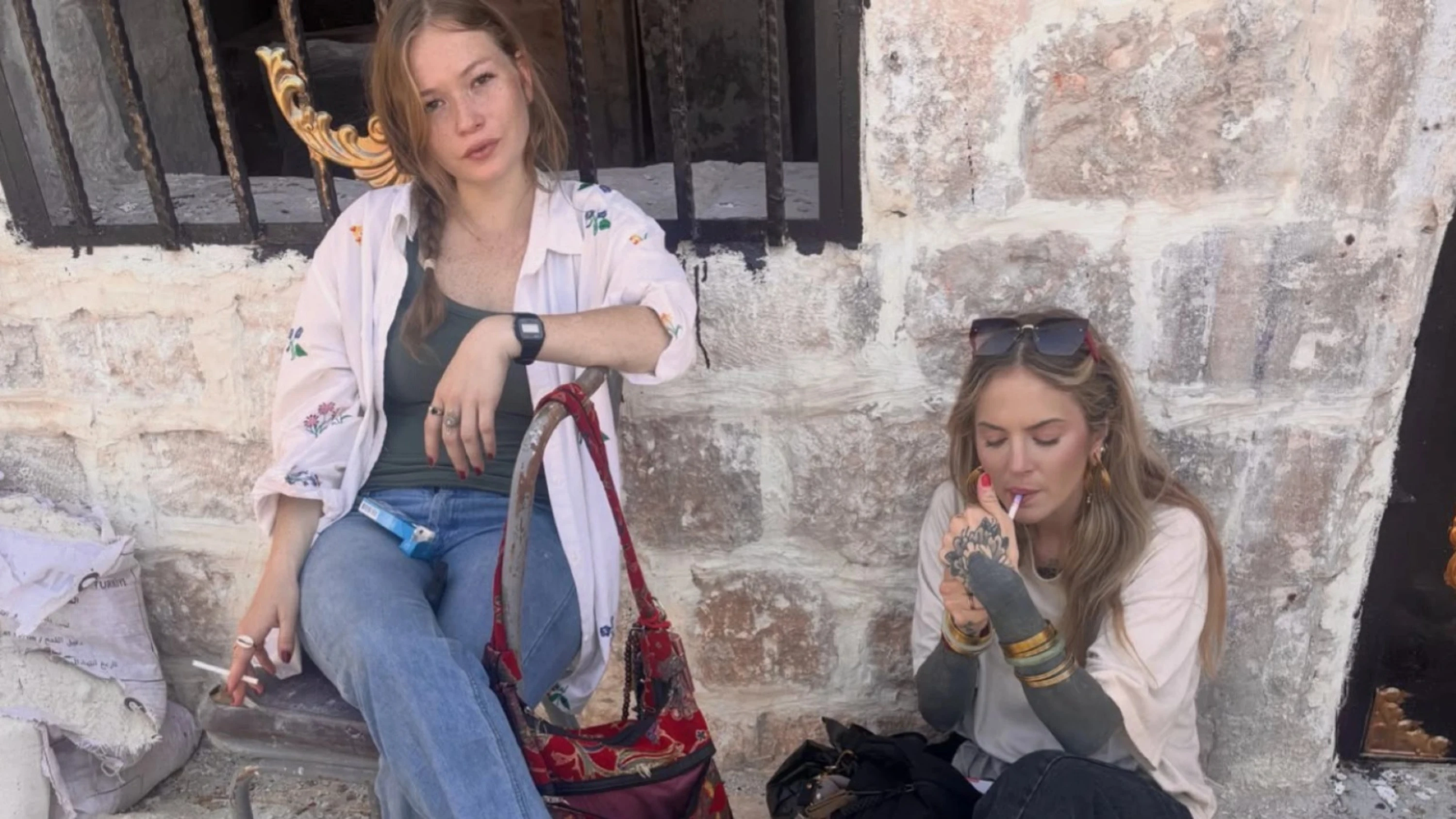
ERBIL, Kurdistan Region of Iraq – Emily Giffin, 22, and Laredo Ertel, 28, had arrived in Baghdad late Thursday night, eager to explore one of the top places on their bucket list. They met a few local friends and decided to stroll the city. Nearly an hour later, they were surrounded by security cars, security forces jumped into their car, and they were taken to a police station, soon to be expelled from the Iraqi capital “for their safety.”
The two had arrived in the Kurdistan Region a few days earlier on September 26. Giffin is an American travel vlogger with over 300,000 followers on Instagram under the username emilysfamous, and Ertel, also American, is a social media manager and Giffin’s travel companion.
The two have traveled to several countries over the past four years, and they were now in Iraq with one intention.
“Our plans were to explore Baghdad. I really wanted to make a lot of content about the Iraqi people, because we've had so many pleasant interactions with them. I've heard so many good things. I wanted to see the history, to walk through the book markets, to go to the marshes, just to explore Iraq and showcase it on my own social media,” Giffin told The New Region on Sunday.
The two had valid Iraqi visas, and after spending five days in the Kurdistan Region, they thought they would also travel to southern Iraq, but their dream was cut short as they arrived a day after the last US troops left the country; now they could not see Baghdad’s famous Mutanabi, the marshes, and the historic city of Babylon, which will now only remain as the Biblical tales they had heard about growing up as kids.
Their nearly one-hour trip in Baghdad barely gave them a chance to get a proper glimpse of the city.
“On our taxi ride back, we saw a monkey in an alley, and we asked the taxi driver to stop. Nice, well-lit area, didn't feel uncomfortable or anything. We stopped, we played with the monkey,” Ertel told The New Region of their Baghdad stroll.
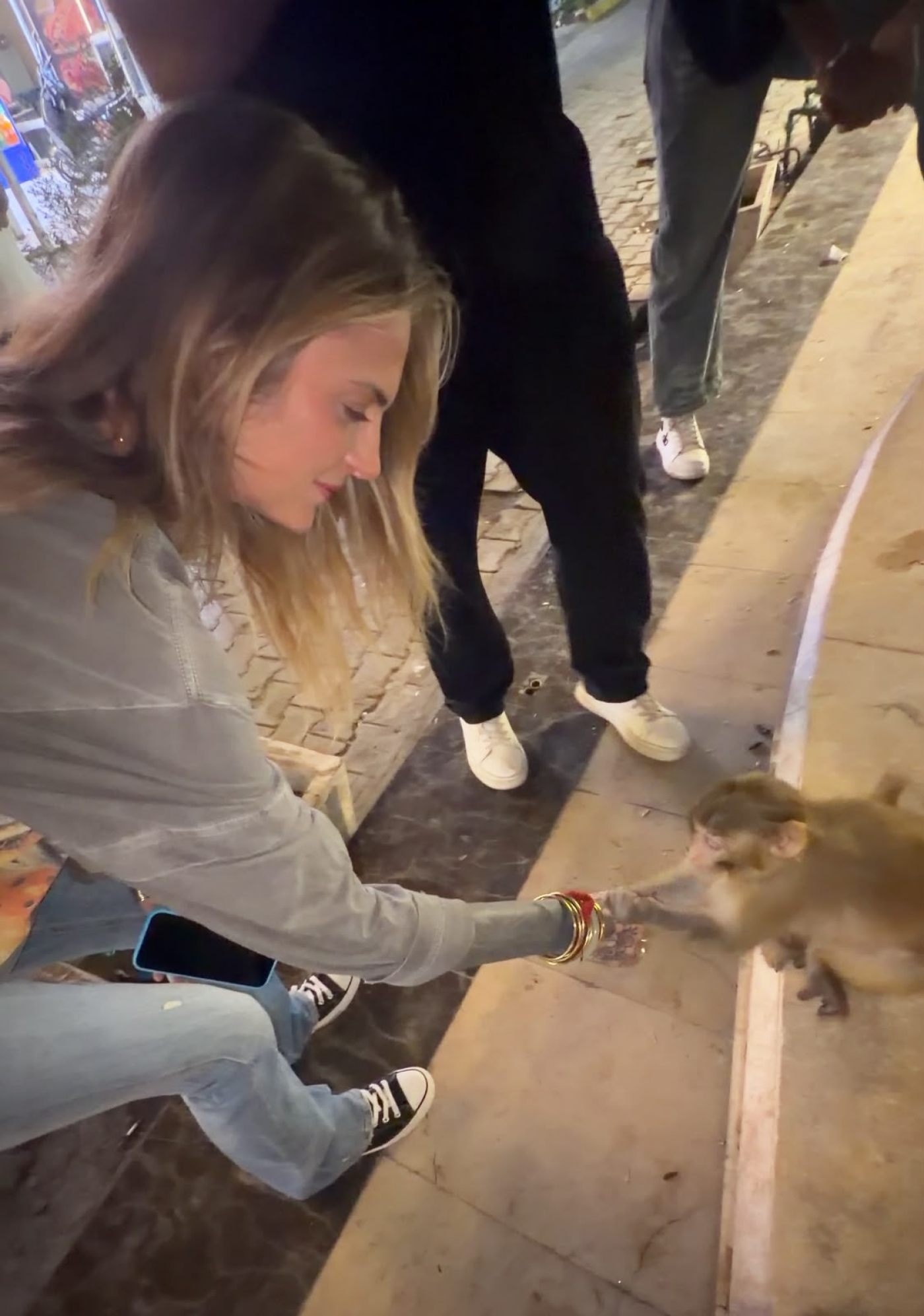
Laredo Ertel in Baghdad’s Bataween area on October 1, 2026. Photo: Submitted
“A big point of travel for us is just connecting with people, and so we had gotten to talking with the guys around said monkey. And they invited us into a barber shop for tea. We sat and had tea for a bit. And then we went with them to this rooftop to overlook Baghdad,” she added.
The two were soon back in the car, ready to head to their hotel. They had already had a long day traveling to Baghdad, and the real fun was set to begin the next day. But on their way back, four cars surrounded them: it was the security services.
The young Iraqi men traveling with them were forced out of the car as security forces entered the vehicle and took the two to a station.
The two did not speak Arabic, but at some point during the journey, they received a phone call from their friend back at the hotel, who told them that the intelligence service was waiting for them there.
Their stay at the station was brief and appeared to be mainly for questioning the local men, whom the two women said had done nothing extraordinary.
“We were all about the same age. They were really kind; they were really communicative about our safety,” Ertel said of the local men who were taken in for questioning.
“He told me, ‘Please take pictures, do whatever so that people know that you're safe.’ He was very much looking out for our own comfort,” Giffin added.
While the investigation was underway, the two women were kept at the station, standing in silence and unsure of what was happening. No one there spoke English, leaving them without any explanation.
The men did not return with them to the hotel. Instead, the two women were escorted there from the station. After nearly three hours of security forces going back and forth with their local friend at the hotel, they were finally given the bad news.
“They said for the time being we're not welcome there, quote-unquote ‘for our safety’,” Giffin said.
“We went upstairs, we packed our bags,” Giffin said. “Then they escorted us all the way to Kurdistan.”
Checkpoint after checkpoint, their security escort would hand them over to another, until they were back in Erbil.
But apart from being denied the chance to see the country they had wanted to see, it was the lack of clear reasoning from the security service that upset the two travellers.
They had previously traveled several countries across the world, including Afghanistan, and more recently, Syria.
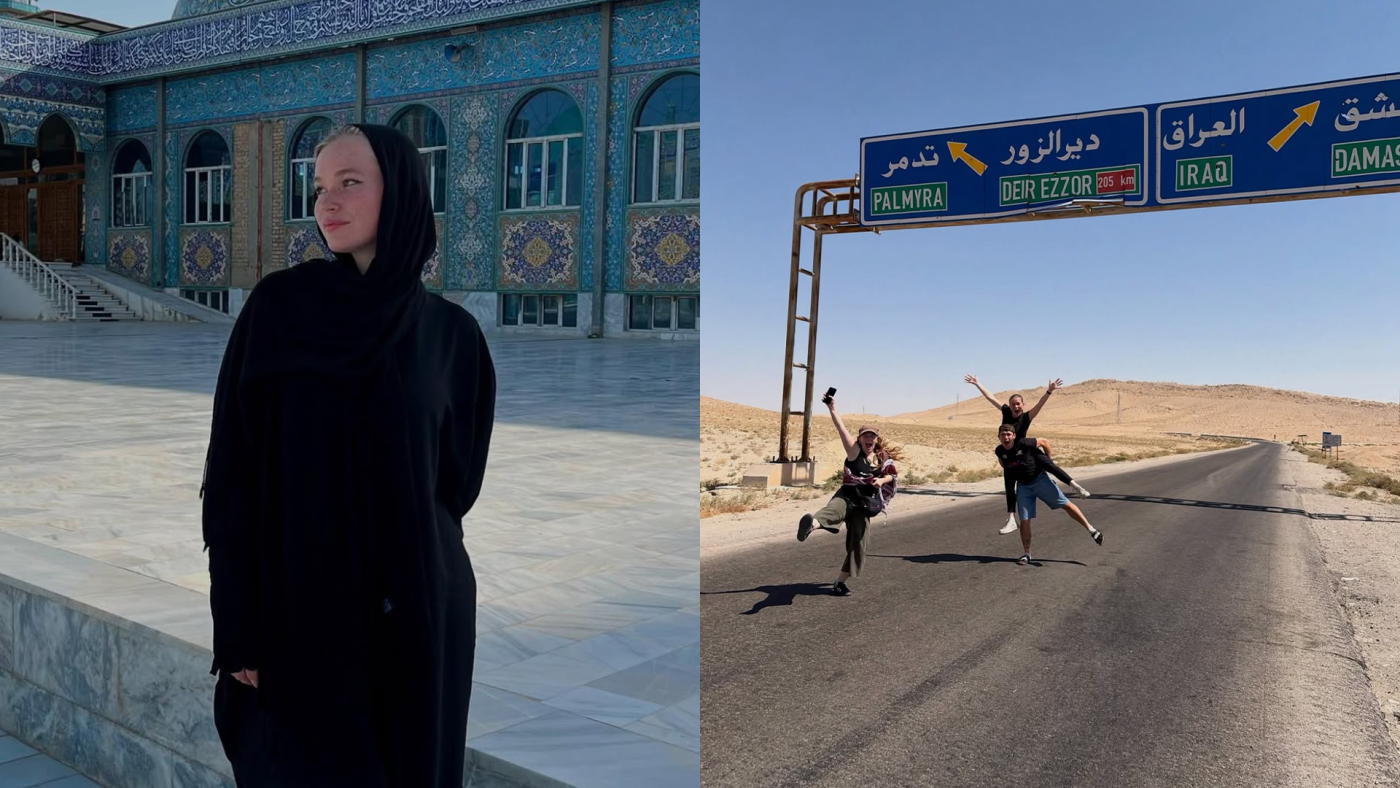
Emily Giffin on a trip to Afghanistan in a photo posted on social media in May 2025 (left) and a trip to Syria posted on September 20, 2026 (right). Photo: emilysfamous / Instagram
“I have traveled to plenty of Level 4: Do Not Travel countries, and I've always been so pleasantly surprised,” Giffin said. “I think we came at not the best time with the US pulling out, so obviously it makes tensions a little bit more high, seeing that we're American and whatnot.”
“It feels like they're trying to prevent something that's not an actual threat. It feels lazy to me, you know? Two Americans, they just don't want to deal with the thought of having us there. They don't want to think about us, you know?”
The New Region has independently confirmed that the two women were in Baghdad’s Bataween neighborhood when security forces arrived to escort them. The neighborhood is right next to Baghdad’s Sadoun street, where Shelly Kittleson, an independent journalist who has reported extensively from Iraq and across the Middle East, was kidnapped in central Baghdad on March 31. Iraq’s influential pro-Iran Kataib Hezbollah announced her release a week later, on the condition that she leave Iraq “immediately”.
Kittleson was in the country to cover the effects of the US-Israel war against Iran. She has extensively reported on pro-Iran militias in Iraq in the past, and reportedly received warnings of potential threats before her abduction.
Iraq remains a difficult environment for journalists. Reporters, particularly freelancers, face risks including harassment, detention, and abduction. Kidnappings of journalists, activists, and dual nationals have occurred periodically in Iraq, often linked to militia activity.
In September, Israeli-Russian researcher Elizabeth Tsurkov was released over two years after she was kidnapped by Kataib Hezbollah. Her release was publicly welcomed by US President Donald Trump.
However, neither Giffin nor Ertel were journalists, nor were they planning to engage with the political side of Iraq.
“One of the things that I really enjoy doing, because I'm not a journalist, I'm just a person who happens to have an Instagram, is I get to show these human stories. And so to me, it feels counterproductive to show this not-so-appealing side,” Giffin said.
“I want people to come to Iraq. I want Iraq to have a future that is flush with tourism, because I think the people of Iraq really deserve it. They've had a really difficult past, and talking to people about it is really heartbreaking. I want them to be able to, you know, feel like they're being represented in a way that's not just war, and that's not just about threat,” she added.
Two sources from the Iraqi Intelligence Service told The New Region on the condition of anonymity that there was no general directive banning American citizens from staying in Baghdad.
“It is a matter of precaution taken in that specific case, but there were no active threats,” one of the sources said, adding that had the intention been to ban them, they would have refused to issue them visas in the first place.
Another source from the Intelligence service told The New Region that in such cases, the normal procedure is to provide security escorts for the tourists to ensure their safety.
Now back in Erbil, with just two days before their next flight to another country far from home, the two are disheartened by their experience in Baghdad but have not given up on their dream of seeing more of the cradle of civilization.
“I will be back, though. I will be back. We have to. One way or another, I'm seeing that book market in Baghdad, one way or another,” Giffin said.
 Facebook
 LinkedIn
 Telegram
 X
X