ERBIL, Kurdistan Region of Iraq – Nearly nine years after the territorial defeat of the Islamic State (ISIS) in Iraq, residents of Jurf al-Nasr in Babil province, a Sunni Arab town, have yet to be granted approval to return, with powerful Iran-backed Shiite militias in firm control of the subdistrict. Its residents have long pushed to return, despite local authorities stressing that pending issues must be resolved beforehand.
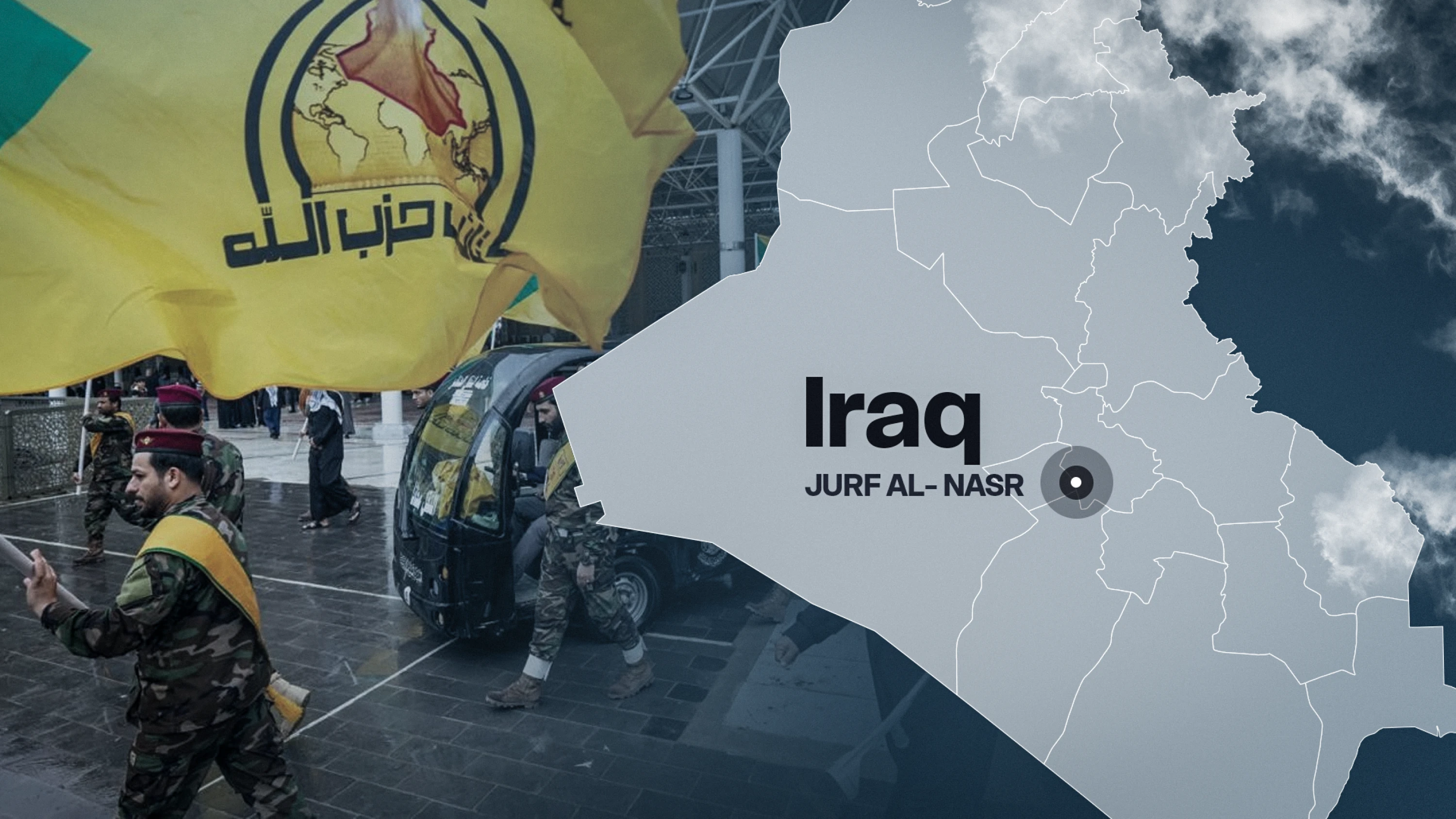
The town of Jurf al-Nasr, formerly known as Jurf al-Sakhar, is a predominantly Sunni enclave within Babil province with a complex yet strategic geography. The area connects Baghdad, Anbar, and the Shiite holy cities of Najaf and Karbala, but its orchards and rural terrain have long made it a prime breeding ground for terrorism.
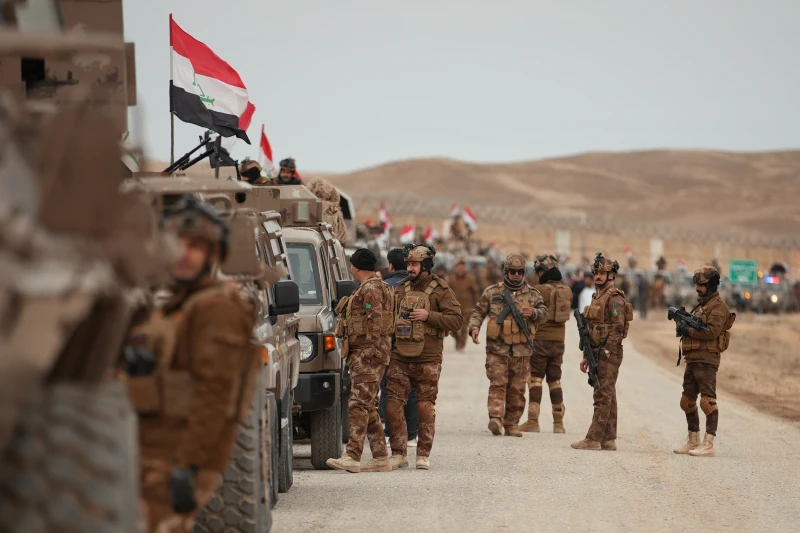
ISIS captured Jurf al-Sakhar in 2014, and the subdistrict was captured by Iraqi security forces and large Shiite formations of Popular Mobilization Forces (PMF) in October of the same year, in a campaign codenamed Operation Ashura. The town was then named Jurf al-Nasr, or the Cliff of Victory, to honor the victory over the jihadists.
But almost 12 years later, the town remains a stronghold for pro-Iran militias. Kataib Hezbollah, one of the strongest Iran-backed Shiite militias in Iraq, remains the principal force controlling the area, drawing the ire of its original Sunni population, who have repeatedly criticized that they have not been allowed to return.
Successive Iraqi prime ministers have made promises to the town’s residents that they would be returned, but no concrete action has been taken. Its residents say that they are languishing in displacement and leading difficult lives.
The exodus
Duha is a native of Jurf al-Nasr. She has lived in the Bzeibiz camp on the edge of Anbar province for over a decade, alongside scores of families displaced from the same area, and said that her people will continue to refer to the town as Jurf al-Sakhar so long as they remain in displacement.
“There is no doubt that life in Jurf al-Sakhar was far better than our current life in the camp,” she told The New Region. “These conditions have taken a heavy toll on us, and the situation is so incredibly difficult that I cannot truly convey the harshness of our reality.”
She accused Kataib Hezbollah of having seized her family’s properties, regretting that they “left behind a great deal of property and equipment, including machinery, vehicles, land, livestock, and other valuables.”
“All I ask is that the officials take note of our plight. Why do they not view us as Iraqis?” Duha questioned, expressing her desire to return, find a job, and live her daily routine of the past.
Samer Atheer, from the village of Owaisat in Jurf al-Nasr, detailed the day that security forces ordered the area’s residents to leave.
“It was a day unlike any other – fear was evident on everyone’s faces. When we realized we had to leave, there wasn’t much time to think or plan,” he told The New Region.
The area’s residents were under the impression that they would soon return, according to Atheer, and many left behind valuables and other goods. “What hurts the most is that we left behind almost our entire lives – not just furniture or possessions – there were small things in the house that I loved and still remember to this day.”
“I never imagined our departure would last this long.”
Why Jurf al-Nasr?
Jurf al-Nasr lies on the southeastern edge of what infamously became known as Iraq’s “Sunni Triangle” – a predominantly Sunni area stretching from Baghdad to Ramadi and Tikrit that became a major center for insurgency and jihadist activity against American and Iraqi forces after 2003.
Its extensive orchards, farmland, and waterways have long provided cover for insurgents, while its proximity to major population centers such as the capital Baghdad and the Shiite holy city of Karbala also made it a lucrative area to control.
Major General Jawad al-Dahlaki, a retired federal police officer, explained to The New Region that many insurgents held in the notorious Abu Ghraib prison near Baghdad escaped to Jurf al-Nasr after the facility was attacked by ISIS in July 2013, giving the area an undesired reputation.
“They launched operations targeting civilians visiting Karbala and Najaf, and began intercepting unarmed travelers, singling them out based on identity and name,” he said, adding that Jurf al-Nasr was already closely watched by Iraqi security forces following the emergence of al-Qaeda in 2003.
He explained that Iraq’s security apparatus was crumbling following the rapid rise of ISIS in 2014, forcing Baghdad to turn to Tehran for weapons and ammunition, which spearheaded the rise of powerful pro-Iran militias.
Among those was Kataib Hezbollah, one of the strongest Iran-backed militias that is part of the PMF.
The PMF emerged in 2014 following a fatwa, or religious call to action, from Iraq’s highest Shiite authority, Grand Ayatollah Ali al-Sistani, urging young Iraqis to take up arms against ISIS.
It was formed after a loose group of militias united to fight ISIS. The PMF has since been integrated into the Iraqi security apparatus, although many of its components continue to operate with impunity and reportedly maintain strong ties to Iran.
“Following the flight of military commanders at the time, there was a dire need for Iranian advisors and the formation of a force operating outside the regular army and police structures,” Dahlaki said. “Kataib Hezbollah were tasked with holding the ground and barring entry to any other forces.”
Kataib Hezbollah has also rejected Prime Minister Ali al-Zaidi’s decision for all armed groups to disarm by the end of September, alongside two other prominent Iran-backed factions – Harakat Hezbollah al-Nujaba and Kataib Sayyid al-Shuhada.
A 2024 report by the UN’s International Organization for Migration (IOM) identified Kataib Hezbollah’s continued control of Jurf al-Nasr as the primary factor preventing returns.
Government position
Hassan Fadam al-Janabi, a former lawmaker in the Iraqi parliament, was among the main PMF leaders supervising the recapture of Jurf al-Nasr from ISIS. He claimed that there is “no refusal” to allow displaced persons to return.
“However, there is opposition to the area becoming inhabited again as it once was, because it presents a complex challenge regarding its location, terrain, and geography. It would be difficult to control should ISIS ever re-enter it,” Janabi told The New Region.
He said “several government measures” will be needed to return the displaced people, and claimed that despite the security measures, only 15 to 20 percent of residents have not returned – in areas that are “densely overgrown orchards and villages that would be difficult to liberate if they were to fall under ISIS again.”
“Successive governments have failed to devise a security plan that guarantees terrorism will not return. They want to repatriate the displaced without security vetting, precautionary measures, or a proper plan – a move rejected by Babil’s people, the Babil Provincial Council, the governor, and the local community,” Janabi stressed.
“The people of Babil – like the rest of Iraq – suffered greatly because of Jurf al-Nasr.”
He is from the Janabi tribe, a predominantly Sunni Arab tribe that constituted the majority of Jurf al-Nasr’s population before it was recaptured by Iraqi security forces and the PMF.
Thousands of the tribe’s members were among those displaced when ISIS took over and during the subsequent military campaign to recapture the subdistrict. Janabi tribal figures have repeatedly called for residents to be granted access to return and for compensation for destroyed property.
The former lawmaker further stated that the Iraqi people have been subjected to “thousands of car bombs and suicide bombers” originating from Jurf al-Nasr, and “security forces found it extremely difficult to enter due to the challenging terrain.”
“If we were to repeat the process today, we would face the same problem: we would once again suffer casualties and make sacrifices, and terrorism would return. There is currently no clear mechanism or plan—one that is convincing to all parties—for the return of the residents of Jurf,” Janabi said.
Moreover, he stressed that the presence of “indeed, tens of thousands” of mines and improvised explosive devices (IEDs) planted by ISIS in Jurf al-Nasr have yet to be cleared. “If displaced people were to return now, they would face grave security risks.”
“If the local residents returned, their movement would be far more extensive than that of our currently limited security forces. Consequently, the security apparatus, the PMF, and the security forces themselves would be accused of having booby-trapped these areas in order to obstruct the return of the displaced,” he said.
For returns to take place, Jurf al-Nasr must first be reconstructed and cleared of explosives, and a clear roadmap must be implemented, according to Janabi.
In 2024, Iraq’s migration and displaced ministry reported that some 6,000 families from Jurf al-Nasr remain displaced, with vetting procedures completed for hundreds of families. Still, they have not been granted the right to return.
The area has also attracted US airstrikes targeting Iran-backed militias, especially during the 12-day war last year and the recent US-Israeli war on Iran, killing dozens of PMF members.
Last month, the Babil Provincial Council voted to once again change the name of Jurf al-Nasr to “Al-Nasr City,” or the City of Victory. The council said in a statement that the vote “came in appreciation of and loyalty to the blood of the martyrs and their great sacrifices in defending the homeland and holy sites.”
However, the federal government in Baghdad has yet to recognize the new name, with no new decision published by the Council of Ministers or published in the Official Gazette of Iraq.
 Facebook
 LinkedIn
 Telegram
 X
X