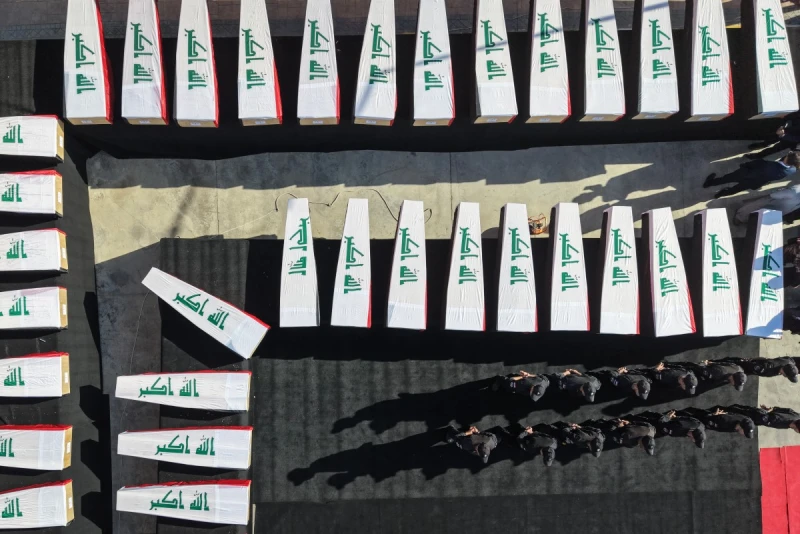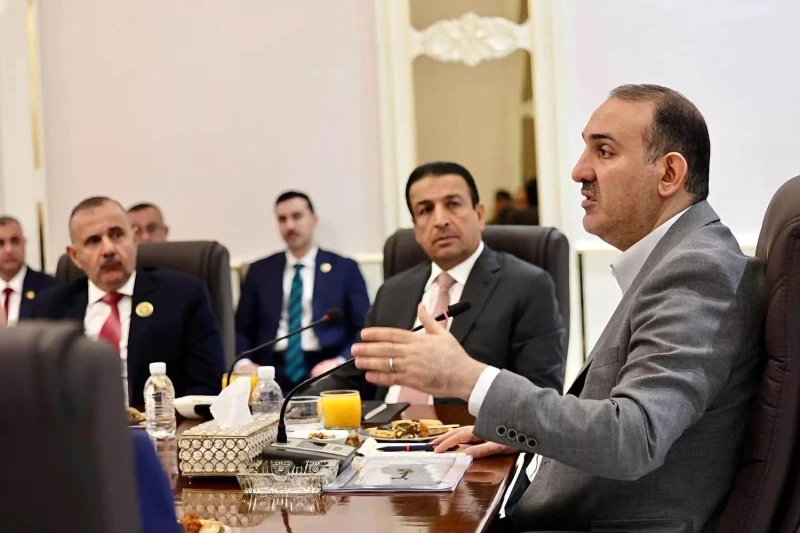
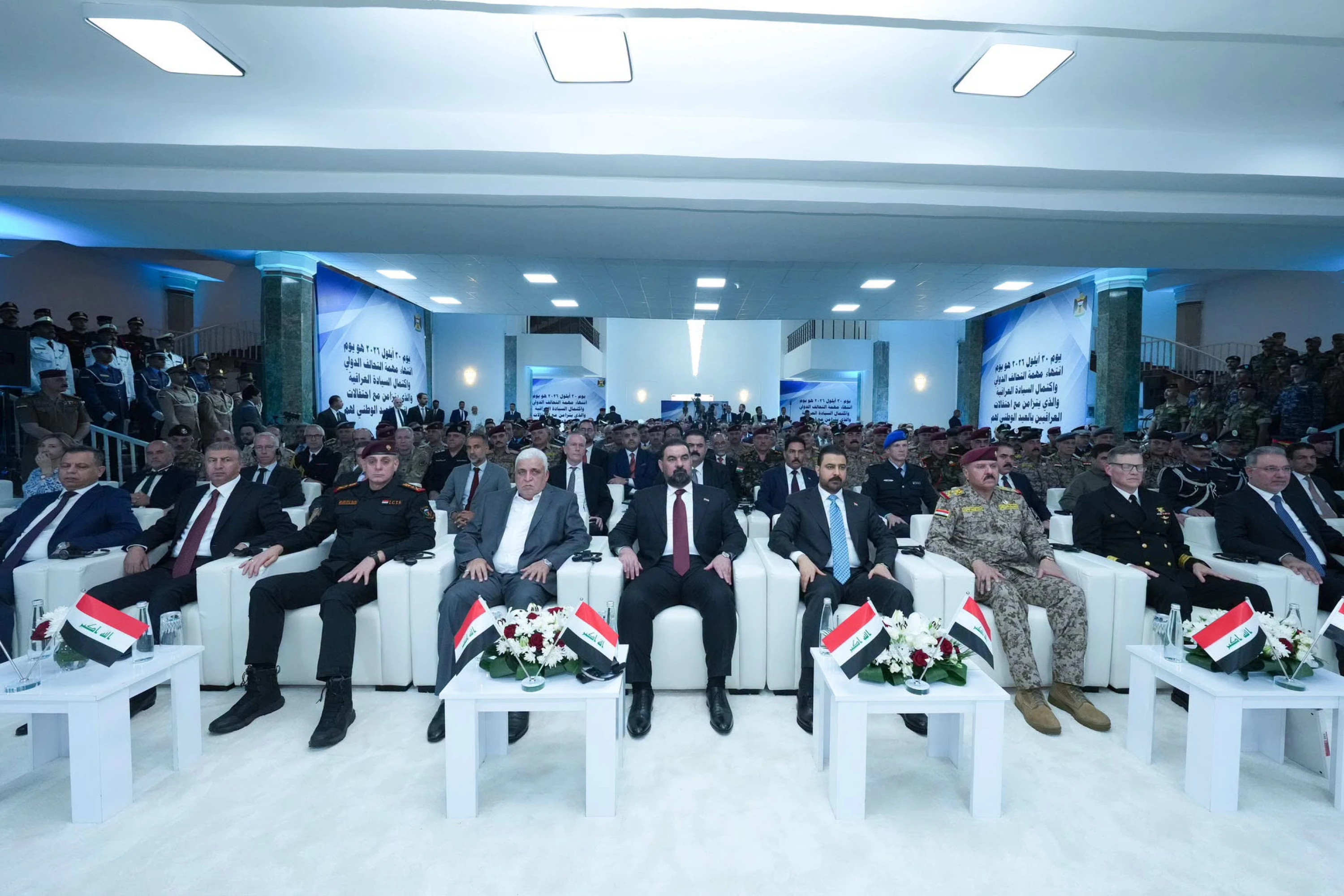
ERBIL, Kurdistan Region of Iraq - Iraq on Wednesday formally marked the end of the international coalition against the Islamic State (ISIS) mission, with Prime Minister Ali al-Zaidi saying the country will assume full responsibility for its security while maintaining relations with the coalition allies.
The US Defense Department on Wednesday announced its full withdrawal from Iraq, adding that the responsibility of addressing Iraq’s security challenges including ISIS remnants now rests on the Iraqi government while the US will continue providing target training and intelligence support.
“We announce the conclusion of the International Coalition’s mission to combat ISIS, demonstrating that cooperation between friendly forces and friendly nations has yielded victory over one of history’s darkest chapters of extremism and brutality,” Zaidi said during his speech at an event celebrating what Baghdad has dubbed "Sovereignty Day.”
“A new phase has begun, one defined by Iraq’s sovereignty, the strength of its institutions, the readiness of its forces, the unity of its decision-making, and balanced partnerships with its friends,” he added.
The US-led coalition was scheduled to complete its withdrawal from all Iraqi territory by September 30 under an agreement between Baghdad and Washington. The withdrawal comes after years of cooperation between the coalition and Iraqi and Kurdistan Region forces in the fight against ISIS.
Zaidi said “security cooperation with our friends in the International Coalition will remain an open avenue, becoming even more effective and focused.”
Kurdistan Region Prime Minister Masrour Barzani on Wednesday said Erbil will remain an “active and influential” partner in fostering relations with coalition countries, while lauding the enhanced capabilities of Peshmerga and Iraqi forces and the strengthened cooperation between Erbil and Baghdad.
The extremist group took control of swathes of Iraqi and Syrian territory in 2014, declaring its so-called caliphate with the Iraqi city of Mosul as its capital. They were territorially defeated with assistance from the US-led coalition forces in Iraq in 2017.
Despite their territorial defeat, ISIS militants have continued to pose a security threat in Iraq through sporadic hit-and-run operations and attacks on remote areas. Iraqi forces, in cooperation with Kurdish forces, have intensified their efforts to eliminate these remnants.
The government had also initially set September 30 as a deadline for armed groups to hand over their weapons to the state, coinciding with the planned completion of the US-led coalition’s military mission in Iraq. Several pro-Iran factions, including Ashab al-Kahf, rejected the call to surrender their weapons.
Baghdad has since shifted toward a longer, phased process extending into 2027. In an interview with The New York Times on September 21 in Baghdad, Zaidi said an initial 90-day period would require armed factions to halt attacks, with guarantees that they would not be targeted by US strikes. That would then be followed by the gradual handover of weapons and integration of fighters into state institutions.
Many pro-Iran armed groups have long used the US-led coalition’s presence in the country as a reason to maintain their weapons. These groups initially helped defeat ISIS but then shifted to also attacking American personnel and interests as tensions soared between Washington and Tehran in the following years.
“There shall be no weapons outside the framework of the law, and no force outside state institutions, in accordance with the Constitution, the calls of our wise religious authority, and the will of our people,” Zaidi said.
While several pro-Iran armed factions have announced their willingness to hand over their weapons and integrate into the state security apparatus, others have expressed skepticism.
The Islamic Resistance in Iraq (IRI) on Wednesday congratulated the Iraqi people on the withdrawal of US forces, taking credit for “the humiliating departure of the American occupier under the blows of the Resistance's drones and missiles.”
“We will use our weapons to defend our arms against anyone whatsoever, and we will not accept any humiliation, conspiracy, or infringement upon our weaponry, our existence, or our legitimacy,” it said, calling its disarmament “a fantasy harbored by the weak, the humiliated, and the slaves of the dollar.”
The IRI also said it would unveil a new weapon while threatening military action against any foreign aircraft in Iraqi skies, adding that “some must expect a response at any moment in retaliation for the martyrs of the Popular Mobilization Forces (PMF).”
Since the start of the war in late February, the US, Israeli, and Saudi Arabia have repeatedly targeted positions of the state-incorporated PMF, which comprises dozens of armed factions that are affiliated with Iran.
The statement echoes remarks by Abu Mujahid al-Assaf, security chief of Iraq’s Iran-backed Kataib Hezbollah which is also part of the IRI, on Monday who said the “resistance” factions will monitor Iraqi airspace starting October and work to overthrow any “enemy aircraft” if they are found in the country’s airspace
“Let Mr. Zaidi and those behind him know: any government that does not work for the benefit of the people will be overthrown by all means,” he said.
 Facebook
 LinkedIn
 Telegram
 X
X