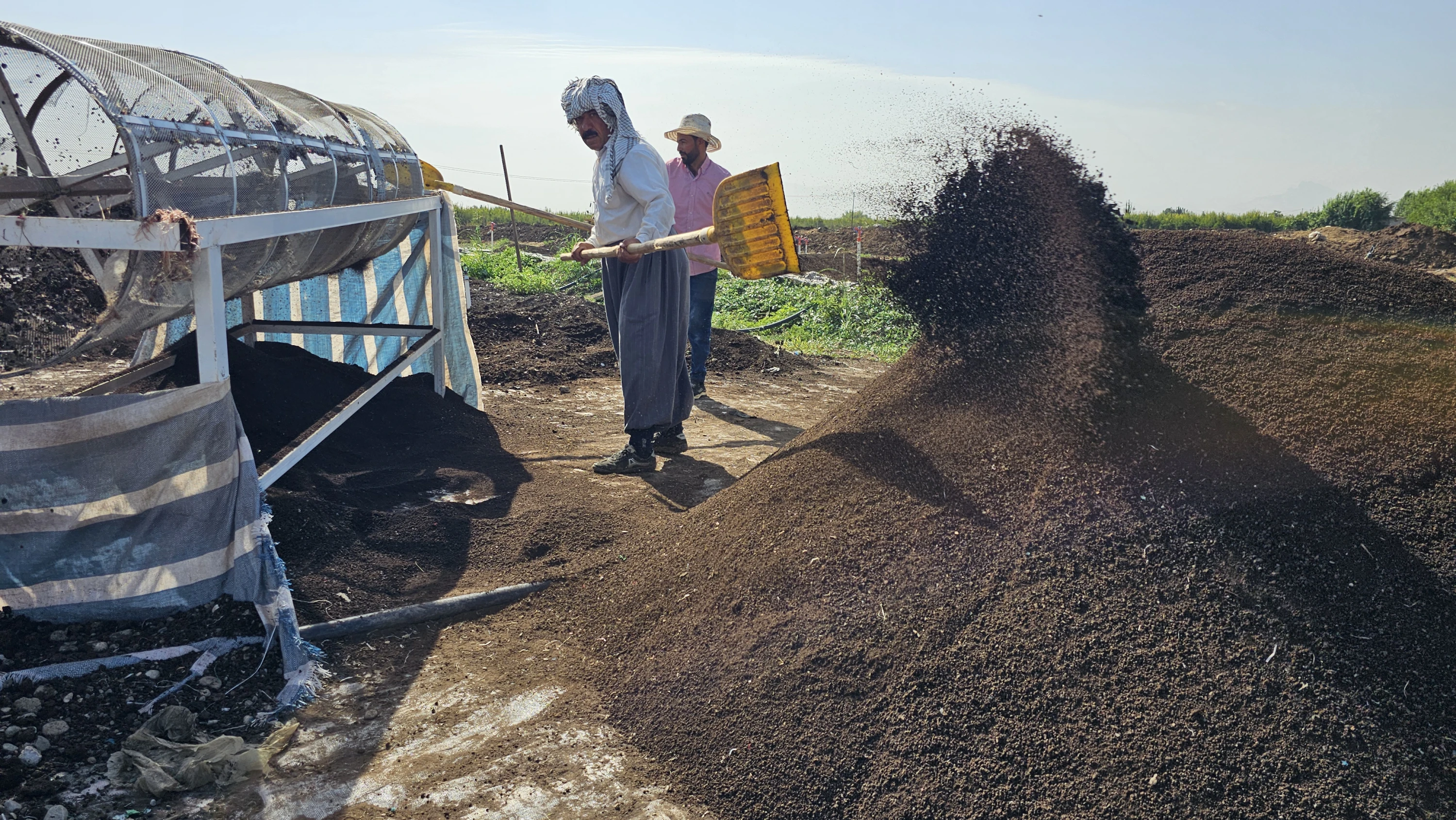
SULAIMANI, Kurdistan Region of Iraq — Beneath the once-renowned fertility of the Sharazoor plain, the earth is choking. Decades of heavy-handed chemical farming, coupled with intensifying climate shocks, have baked the soil into a hard, saline crust. But while traditional agriculture gasps for breath, three unemployed agricultural graduates have found an unlikely savior: millions of red earthworms.
By launching the Kurdistan Region’s first vermicompost plant, these young pioneers are proving that grassroots organic innovation can heal poisoned land, bypass a stagnant job market, and rewrite the future of regional farming.
Located in Sharazoor plain, an area historically celebrated for its fertility, the initiative produces specialized bio-fertilisers using red earthworms to digest local agricultural and animal waste. Local agricultural engineers praise the resulting worm humus, also known as worm castings, as a transformative “soil revitaliser,” offering a cost-effective lifeline against worsening soil salinity, hardening, and desertification without synthetic chemical inputs.
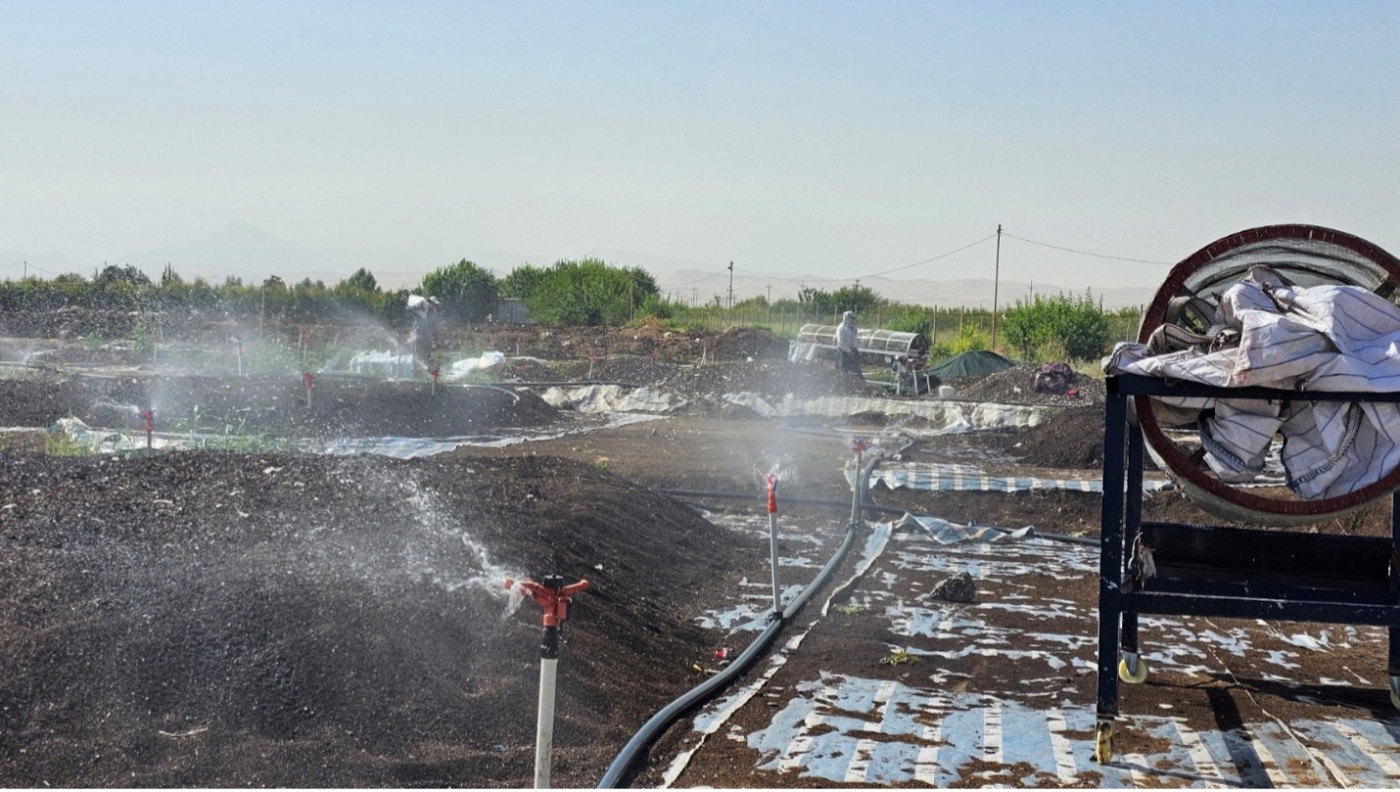
The "Khaki Sharazoor" (Sharazoor Soil) project. Photo: Dana Taib Menmy.
Aligning with the KRG’s agricultural vision
Kurdistan Region Prime Minister Masrur Barzani’s cabinet has placed agricultural revitalization, food security, and economic diversification at the forefront of its governance strategy. Moving away from total reliance on oil revenues and a bloated public sector burdened by austerity and federal budget disputes, the KRG champions modern farming initiatives and local enterprise development.
For Rojyar Sirwan, a young agricultural engineer, the venture was born out of stark economic necessity and ecological alarm.
“We, as three agricultural graduates who did not find employment opportunities in the public sector, thought of a game-changing plan: returning to nature to produce the best organic fertilizer through breeding the soil’s red worms,” Sirwan told The New Region during an insight tour of the facility.
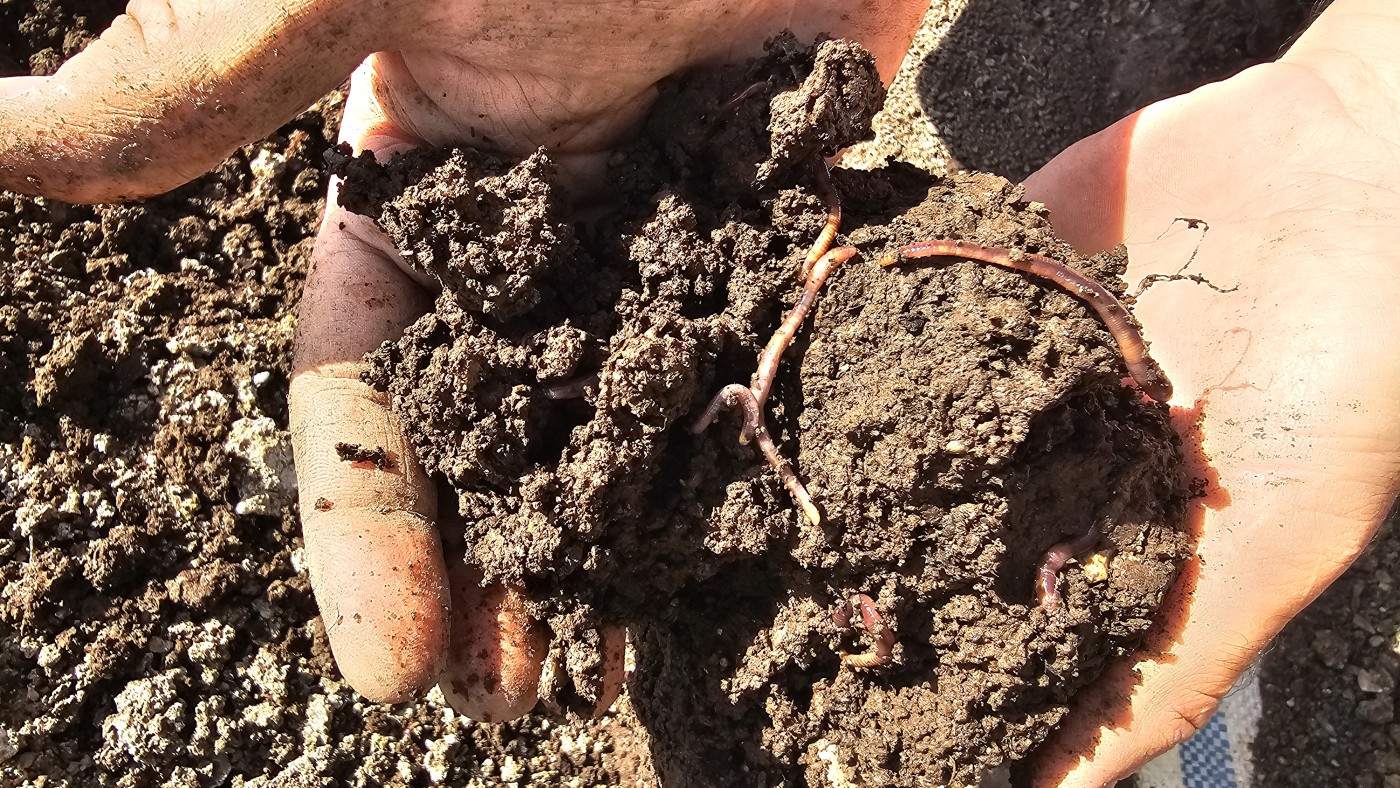
Investing in the soil’s red worms. Photo: Dana Taib Menmy.
A five-year scientific journey
Following a rigorous five-year study plan, Sirwan and his partners uncovered a sobering reality about the region's farmlands.
“We found that the Kurdistan Region’s agriculture sector and agricultural lands are in a bad situation due to the unscientific use of chemical fertilizers that have led to the annihilation of the Region’s red worms in the soil,” Sirwan explained.
To counter this ecological disaster, they had a new plan.
“We imported large amounts of soil’s red worms and started breeding them at our farm in Sharazoor plain by providing a moist atmosphere where we feed animal waste to the worms, and eventually producing a pure organic fertilizer in a scientific method,” Sirwan added. “As a result of the biological process inside the worms’ stomachs after eating the animal waste, they produce a waste that is a final, high-quality, purely organic fertilizer called vermicompost.”
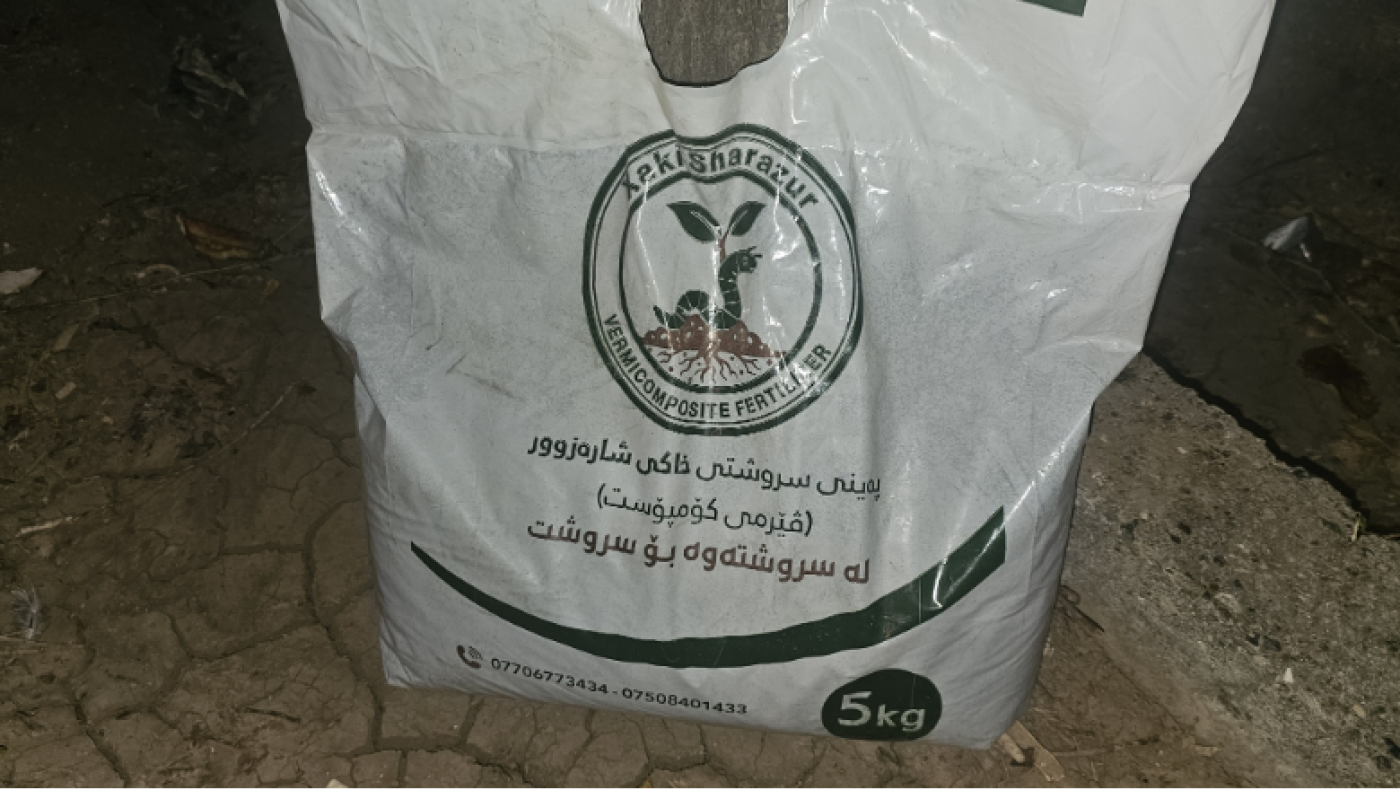
The Final vermicompost product. Photo: Dana Taib Menmy.
Sirwan noted that the worm humus naturally introduces beneficial microbes and plant growth hormones that boost root development, strengthen resilience, and fight soil illnesses like fungi and nematodes. He added that applying the product for three consecutive years automatically renews the fertility of exhausted soil by the fourth year.
Giving the soil another chance
The business has also begun testing the material to establish what it contains.
According to a laboratory analysis from the Kirkuk Directorate of Agriculture’s Department of Irrigation and Modern Technologies, Water, and Soil Management Branch, provided to The New Region, the material had a pH of 6.94 and an electrical conductivity of 1.2 mS/cm. The analysis recorded 1.9 percent total nitrogen, 0.72 percent total phosphorus, and 0.4 percent total potassium, alongside 30.8 percent organic carbon. Its carbon-to-nitrogen ratio was 16.4, while moisture content was 59.6 percent on a dry-weight basis.
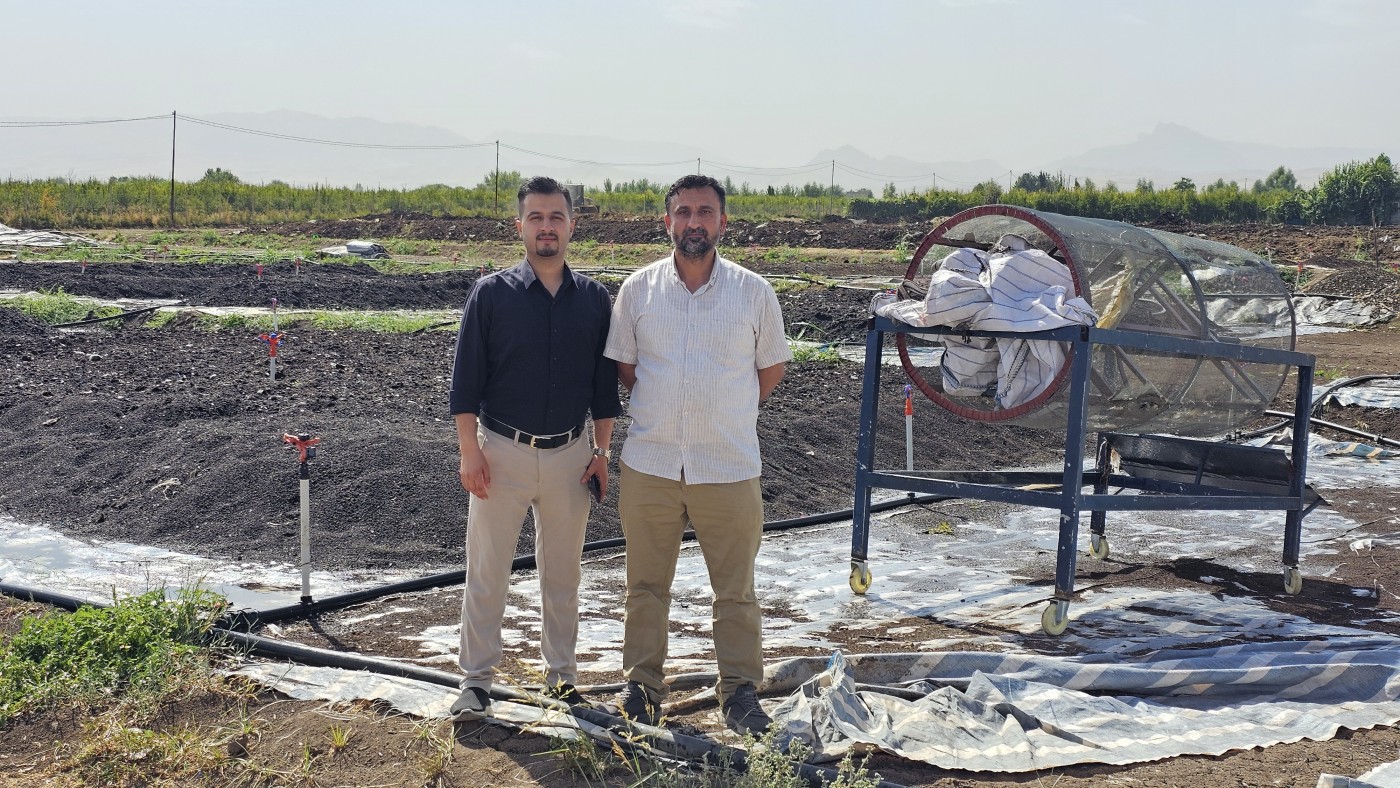
Rojyar Sirwan (left) standing with The New Region’s Dana Taib Menmy at the plant.
The figures provide of a nutrient-containing organic amendment with substantial organic carbon and a carbon-to-nitrogen ratio consistent with a stabilized composting process. Its near-neutral pH makes it suitable for agricultural soils, though further testing is needed to establish its full agronomic and safety profile.
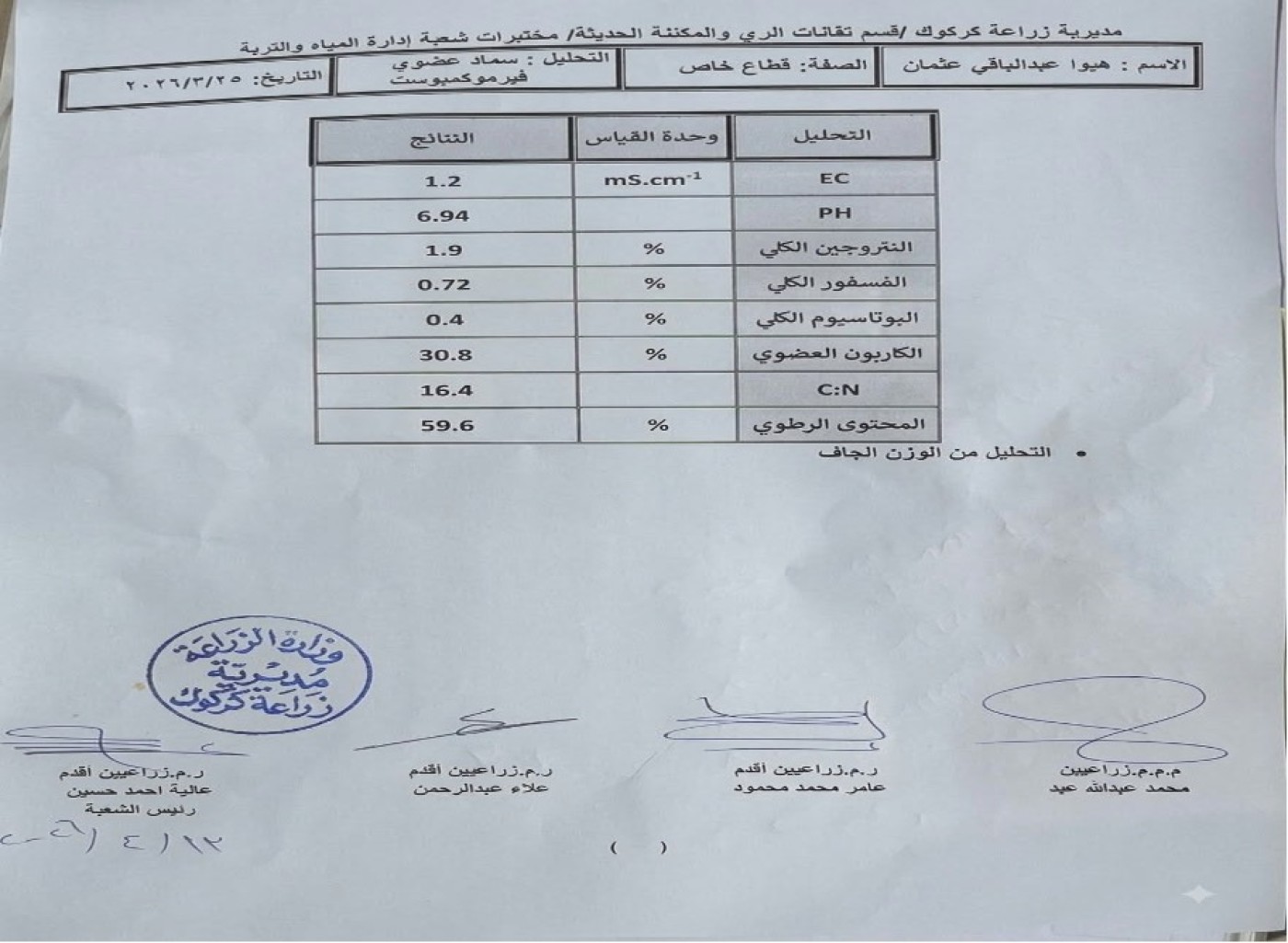
A laboratory analysis from the Kirkuk Directorate of Agriculture’s Department of Irrigation and Modern Technologies, Water and Soil Management Branch.
Tackling toxic farming and public health
Agricultural consulting engineer and Mega Farm owner Sharokh Mohammed told The New Region that the Sharazoor project tackles a deeper, more insidious crisis: the link between unregulated toxic agrochemicals and soaring cancer rates across the Kurdistan Region. Unregulated farming has turned local fields into chemical dumping grounds.
Farmers frequently rely on smuggled, expired, or banned pesticides alongside chemical fertilizers laden with heavy metals like cadmium and lead. Because these chemicals are applied excessively without safety degradation periods, high concentrations of hazardous residues end up directly on produce in local markets, driving a documented rise in gastrointestinal cancers, leukaemia, and chronic illnesses.
“The vermicompost project is the first private initiative to develop agricultural projects and deal with two main issues in the Kurdistan Region: infertility due to excessive usage of chemical fertilizers and far away from scientific methods, and unhealthy crops that lead to many kinds of cancer, as ratified by many researchers,” Mohammed told The New Region.
“Such challenges made us develop the vermicompost in the Kurdistan Region and, for the first time, we imported the red soil worms into the Region, and we tested our product at laboratories owned by the Iraqi government, and the results were excellent as a ready-made food for the plants,” Mohammed added.
Regarding official licensing, Sirwan noted the unique challenges of pioneering an unchartered sector.
“Since it is very rare and new, there is no guidelines or laws regulating establishing such a business, but for the sake of supporting local businesses, the KRG Ministry of Agriculture in Sulaimani permitted us to fulfil the project,” Sirwan said.
Mohammed recalled that related government bodies initially met the initiative with scepticism.
“Due to a misunderstanding of the initiative, related government bodies initially showed a cold shoulder to the project, but after tests confirmed many positive benefits such as increasing productivity and increasing the quality of crops that last longer in refrigerated plants, they supported the initiative,” Mohammed noted.
While the small plant has created jobs for 12 local workers, widespread agricultural transformation requires heavy institutional investment. However, their product remains cheaper than imported chemical fertilizers.
Looking ahead, Mohammed and his team have submitted a formal proposal to the Kurdistan Region Investment Board, seeking a licence for a larger plant.
“The KRG imports 200,000 tons of chemical fertilizers, and through investing in such a local project, it would limit the outflow of millions of dollars out of the country,” he said.
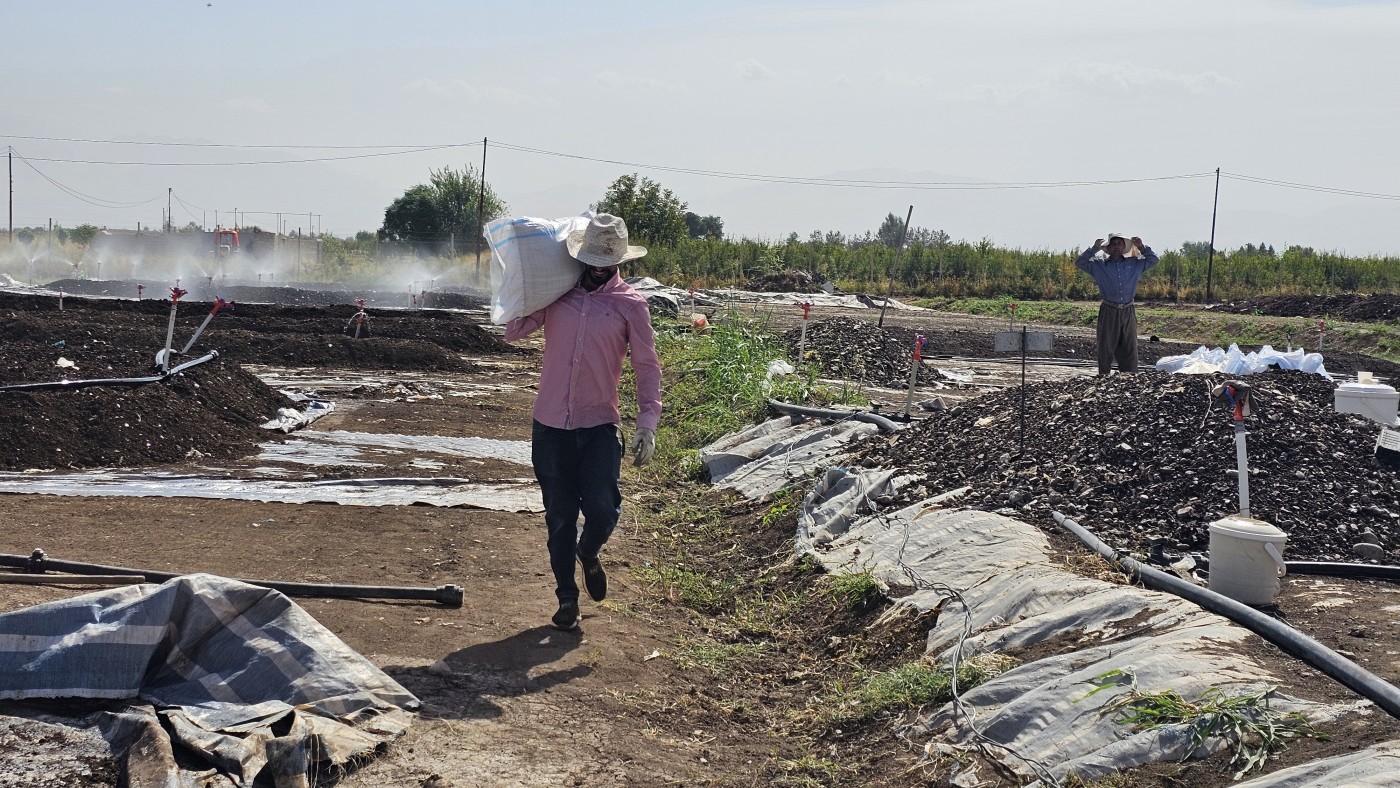
The small business initiative provides jobs for 12 local workers. Photo: Dana Taib Menmy.
Mohammed also highlighted an organic bonus embedded in the product: “The vermicompost is not only a ready-made fertilizer, it would also include a valuable gift for the farmers as it includes eggs of the worms that would eventually lead to the fertility of the soil.”
Ground-level innovation meets macro overhauls
This grassroots push aligns with broader national overhauls. Across Iraq, the fertilizer sector is undergoing a rapid, multi-billion-dollar transformation to replace nearly $155 million in foreign imports with domestic production via state revamps and international partnerships.
Meanwhile, the KRG is bypassing trade volatility by tying its localized blending and chemical plants directly into regional supply hubs.
For the three young entrepreneurs in Sharazoor, these macro-level shifts underscore the urgency of their mission. By proving that organic innovation can outpace chemical dependency, they are not only healing Kurdistan’s poisoned soil from the ground up, but also charting a resilient new course for a generation building a future at home.
 Facebook
 LinkedIn
 Telegram
 X
X