
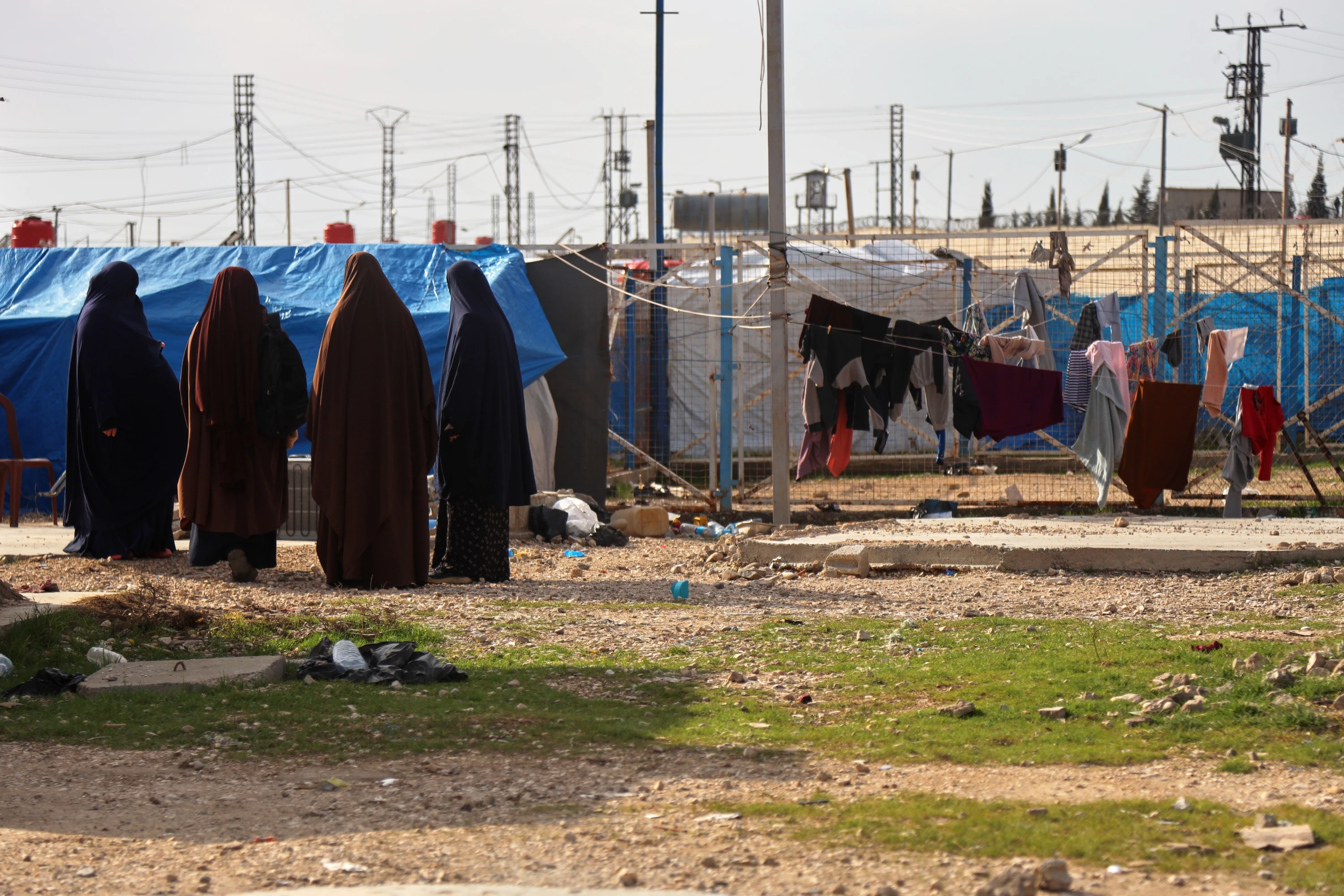
ERBIL, Kurdistan Region of Iraq - The co-chair of the Roj camp in northern Syria, which hosts about 2,300 Islamic State (ISIS)-linked women and children from dozens of countries, has denied media reports that administration of the camp has been handed over to Damascus, asserting that the integration of Kurdish-led forces into the Syrian state “does not entail a direct transfer of its administration from one entity to another.”
Located in Hasaka province, the Roj camp was established in 2015 to house the wives and children of ISIS fighters, and has historically been administered by the now-dissolved Kurdish-led Autonomous Administration of North and East Syria (AANES).
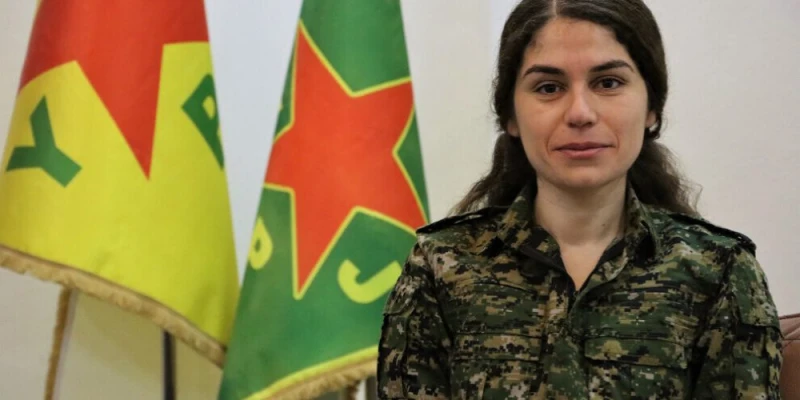
“I would like to clarify that there has been no significant change to the existing conditions within the camp, and the situation remains unchanged,” Hekmiya Ibrahim, who co-administrates the facility, told The New Region in an exclusive interview.
“There is no handover process in the sense portrayed in some media reports,” she said. “What is being discussed is an integration process, not a handover of the camp or a direct transfer of its administration from one entity to another.”
“This process includes exploring mechanisms for integrating the existing entities, forces, and institutions within the camp into governmental frameworks and institutions, ensuring that existing issues are addressed in an organized and responsible manner,” she concluded.
“It is important to clarify that this process is still in the discussion and understanding phase and has not yet been implemented. Therefore, portraying the situation as a handover of the camp to Damascus is inaccurate and does not reflect the reality of the current procedures.”
Read More: Fears mount over escape of ISIS families from another Rojava camp after al-Hol events
A prospective handover of the site to Syrian state forces has raised fears of a potential mass escape, with the al-Hol camp, whose administration was transferred from Kurdish-led forces to Damascus on January 20, seeing most of its 6,000 residents flee by February 7.
However, the Roj camp's administration remained unchanged. After the January 29, integration agreement between Damascus and the Syrian Democratic Forces (SDF), repatriations have resumed from the camp in coordination with Damascus, including on November 7.
“I can confirm that nine Somali families, totaling 32 individuals, were recently handed over to a Somali delegation representing the Somali Embassy in Damascus, as part of the ongoing handover process,” Ibrahim said.
“While this latest repatriation is great news for detainees who want to go home, an involuntary transfer of women and children to a country where they are at serious risk of torture and other abuse would be a violation of international law,” said Letta Tayler, Senior Researcher on Terrorism and Counterterrorism at Human Rights Watch (HRW), who recently visited the Roj camp three times.
Read More: Australia rules out repatriation of ISIS-linked individuals from Syria
On February 16, 2026, a group of 34 Australians traveling to Damascus for repatriation from Roj camp was sent back due to issues of coordination and opposition from the Australian government.
But eventually coordination between Damascus and the camp was improved. Later, the Australian women and children were repatriated, one group left on April 24, 2026, with the final group leaving on May 21.
In July, two Tunisian families from Roj camp were also transferred to the Syrian government, as reported by the Syria-based North Press Agency..
A civil society worker in Derik on the condition of anonymity told The New Region that “the fund by UN and INGOs for the camp has been extended for another 2 years. So the camp will remain for the foreseeable future.”
He added that “all camp employees now get their salaries from Damascus. So basically they have integrated, but all are the same self-administration employees and security personnel as before, who are now integrated.”
Mona Thakkar, research fellow at International Center for the Study of Violent Extremism (ICSVE), tracking militant groups and their financial networks, also confirmed to The New Region that the repatriation of foreign ISS women continues from Roj.
“Internal channels claimed that Somali women were repatriated from Roj yesterday, prompting other IS women to express hope that they, too, would eventually be released or repatriated to their home countries "claiming that they have been in a decade of captivity inside these camps and they deserve freedom"
“Some women, however, are reportedly attempting to raise the funds needed to arrange their own smuggling out of Roj,” she continued, noting that residents have created online fundraising efforts to acquire new mattresses, carpets, food packages through crypto donations,
“Some women have also expressed hope that the Syrian government would facilitate better access to humanitarian assistance in Roj camp including provision of electricity and gas supplies, to improve living conditions inside the camp,” she added.
“Conditions have gone from bad to worse at Roj this year. More moderate women and children live in fear of hardline ISIS followers among the detainees. Meanwhile, tension and violence are mounting between detainees and guards,” Tayler added.
“Both sides see no end in sight to this indefinite, unlawful detention of women and children with no charge or trial.”
“The only durable solution to this mass detention crisis is for governments that respect the rule of law to promptly repatriate their nationals. Adults suspected of crimes can be prosecuted once home. But foreigners at risk of torture, unlawful execution and other abuse if repatriated should never be forced to go home.”
Beatrice Eriksson, Director of Repatriate the Children Sweden, told The New Region, that they commend every country that takes concrete steps to end the arbitrary detention of its citizens in Syria.
“Now that Syria has a government that states have diplomatic relations with, they can simply ask for their citizens to be returned and work with the Syrian authorities to make it happen.”
“Ultimately, the responsibility for resolving the situation in Roj camp lies with the states whose citizens are held there. It’s unfair to outsource that responsibility to Syria. Every successful repatriation demonstrates that solutions are possible. Other states have no reason not to follow suit to contribute to resolving this unlawful situation once and for all.”
“Over the past seven years, we have seen overwhelmingly positive outcomes of repatriations. With the right support, families rebuild their lives, children return to school, and security concerns can be addressed. Protecting human rights and ensuring security go hand in hand, and repatriation creates opportunities for accountability and justice for the victims of ISIS crimes.”
 Facebook
 LinkedIn
 Telegram
 X